Suffolk Moth Group Newsletter
Issue 33 - Summer 2004
Edited by
Tony
Prichard
In this issue
Editorial
Initial concerns
at the start of the season that moth numbers this year appeared a bit
low and that this season would be rather poor in comparison to last
year have proved largely unfounded. June and July have proved
particularly productive in terms of recording some of the county's more
localised species and migrants. Although we have now started the long
slide
towards the hornet season and winter there is still plenty of interest
to see and record so keep the traps running. The graph below shows the
number of species recorded as adults per month from the moth database -
quite a few things to see right up to December.
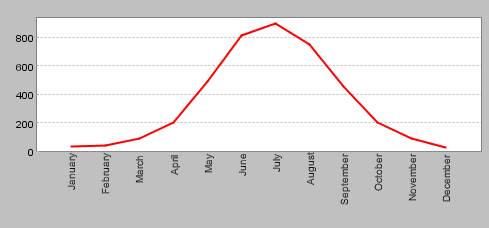
Species recorded per month
(adults only)
The English names given to some of the moths by the Victorians have a
certain character and often capture the essence of a certain aspect of
the moth's appearance. However, some of the names we now use replaced
earlier names so I'll finish with a puzzler - any ideas what is the
current name for moth that used to be called Goose Egg?
The next issue of the newsletter is scheduled for around the end of
October.
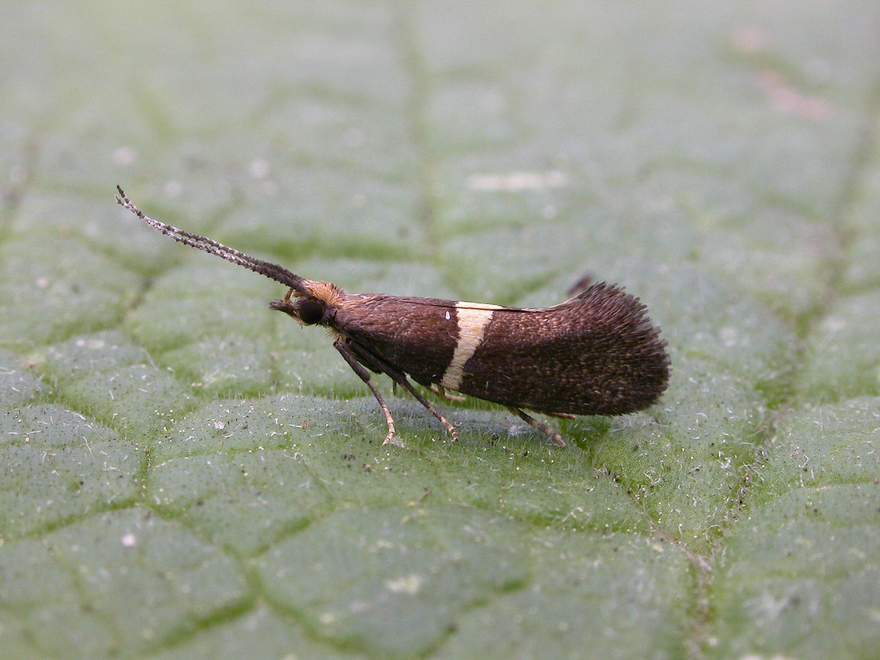
Coleophora
fuscicornis in Suffolk - Tony Prichard
At the
group's indoor meeting Brian Goodey gave an interesting in-depth talk
on Essex's remaining endemic moth species, Coleophora
fuscicornis, detailing
habitat requirements, life history and field signs. As the moth is
present in Essex at sites just to the south of the Stour it seemed
quite reasonable that the moth could easily have made its way across
the river and into Suffolk. The only problem would seem to be the
relative lack of suitable habitat in Suffolk - rough grassy areas with
the foodplant, Smooth Tare, normally close to the coast.
Brian looked
at a couple of sites in Suffolk in early June, one north of Shotley
that
turned out not to be suitable and one in Felixstowe where there was
plenty of the foodplant but no C.
fuscicornis was found. I counted myself lucky when I
managed to sweep one adult at Erwarton Bay on the 6th June 2004. The
identity was confirmed by Brian and the moth had the distinctive orange
eye lashes. Further visits to the Felixstowe area and Shingle
Street by myself both proved negative, although I may have been a bit
on the late side when I visited Shingle Street. A search for cases at the
Erwarton site on the 26th June unfortunately did not turn
up any, their presence would have been useful to lessen the possibility
that the adult I had caught was only a transient.
Many thanks
to Brian for his help in locating this species and
confirmation of identity. Brian did point out at the time that with
this species
now occurring in Suffolk Essex has now lost their last claim to an
endemic
species. Will they return the favour?
Cameraria ohridella,
Horse Chestnut Leaf Miner, arrives in Suffolk - Tony Prichard
In the
Summer 2002 issue of the newsletter I did a short note on this species
mentioning its rapid progress across Europe and it only being a matter
of time before it arrived in this country. By the time I was writing
the Moth Notes 2002 for the SNS Transactions the species had made it
across the Channel and mines had been found in London. In the SNS Moth
Notes I predicted it would only be a few years before this species
appeared in Suffolk. I was possibly a bit cautious in my prediction as
the species has taken under two years to reach the county.
Neil Sherman
made the initial discovery at the Ipswich Golf Club car park on the 5th
August. It appears that this species may be hitching rides on
cars and trains and this might help explain its rapid spread. Neil
mentioned that the car park at the IGC has plenty of visitors from the
London area, so it would fit in with the hitch-hiking idea. A record by
Neil and Graham Bull from Ramsey Wood on the 7th August possibly
doesn't fit so well with this idea - the wood is set a few hundred
yards away the main road. Lee Gregory found the first mines for West
Suffolk at Great Livermere on the 9th August. Darren Underwood also
recorded the species at Long Melford on the 12th August.
Matthew
Deans has since found the mines at Bawdsey and I found some at
Melton while on the way to the SMG Orfordness trip. Rob Parker has
reported that some trees he's checked at Bury St Edmunds have all
proved negative and I had no luck with some at Ixworth. So it
would appear that it's not everywhere at the moment but it won't be
long before it is. Well worth checking out the horse-chestnuts in your
area, especially if they are near a major road or railway line. I'd be
interested in hearing the results both positive and negative.
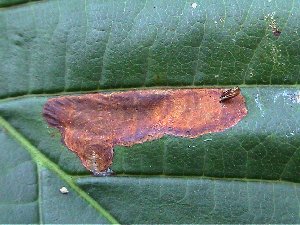
|
|
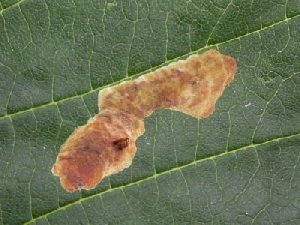
|
| Cameraria ohridella © Lee
Gregory |
|
Cameraria ohridella © Darren
Underwood
|
Dissection Workshop - Tony Prichard
In the last
newsletter I mentioned that we were hoping to organise a dissection
workshop this autumn. This has now been arranged and the workshop will
take place at Ipswich Museum on Saturday 20th
November 2004 from 1pm to 4.30pm. Jon Clifton is kindly offering his
services to lead the event and give practical demonstrations on how to
dissect moths. Moth dissection is needed to confirm the identity of a
few of the macro-moths and a larger number of the micro-lepidoptera so
it's a useful skill to be familiar with.
Jon
previously ran a dissection workshop for the group a few years ago but
technology has moved on since then. We intend having a television
screen hooked up to the microscope so that people can see what is going
on without having to continually shuffle round in turn looking down the
microscope. The plan is for Jon to run through two or three dissections
of macros and then there should be the opportunity for people to have a
go themselves. If you intend coming along then please book a place with
myself as there may be a limit on numbers if this proves a very popular
event. If anyone coming along has a dissecting microscope or other
pieces of dissecting equipment and doesn't mind sharing then this would
be very useful. Also if you have any moths that require confirmation by
dissection then please bring them along (Grey/Dark Daggers, Ear Moth
spp., worn Pugs, Marbled Minor spp.)
Clearwing Hunting
2004 - Lee Gregory
I purchased
a set of Clearwing pheromones in 2001 from Andrew Collins as advertised
in Atropos. As I had only seen Hornet Clearwing before that had been
bred by Neil Sherman, I thought this would be a good way of seeing some
other species. After initial disappointment with the pheromones in
Suffolk I tried further afield including Dorset, Anglesey, Kent and
other areas with better luck at known sites and also finding new sites
for several species.
In 2003
gaining more confidence and experience in locating likely
sites for clearwings I found Orange-tailed and Six-belted Clearwings in
Cambridgeshire and this spurred me on to look again in Suffolk in 2004.
On 13th June
with Paul Bryant and Matthew Deans, we managed to attract
Red-tipped Clearwing to a combination of pheromones at Hengrave on the
River Lark. We cannot take the credit for finding this species at this
site as Adrian Parr recorded it here in 2003.
On the 22nd
June with Paul Bryant we attracted 10+ Orange-tailed
Clearwings to pheromones hung on Wayfaring Trees between Barton Mills
and Red Lodge along the A11- a new species for Suffolk. I found the
Wayfaring Trees here in the spring when driving past and noticed the
flowers. Wayfaring Tree is quite scarce in East Anglia and these were
probably planted as landscaping plants when the road was made into a
dual carriageway quite a few years back.

|
|

|
Orange-tailed
Clearwing © Lee Gregory
|
|
Red-tipped
Clearwing © Lee Gregory |
On the 27th
June with Graham Bull, Tony Prichard and Neil Sherman we
attracted four Six-belted Clearwings to pheromones hung on Birds-foot
Trefoil at Little Blakenham Chalk Pit. There are old records from for
this species from Suffolk but this is the only recent one.
|

|
|
|
Six-belted
Clearwing © Neil Sherman
|
|
This season
Anglian Lepidopterists Supplies have been trialing a new
single pheromone for Red-tipped Clearwing that works much better than
using the three pheromone combination which has a very weak attraction.
It will be interesting to see next season with the new pheromone if
Red-tipped becomes the most common species.
Field
reports - Tony Prichard
Moth Night -
Lower Hollesley Common - 1st May 2004
This is
becoming a reasonably well-recorded heathland site at the southern end
of the Sandlings. A good selection of spring species were
recorded amongst the 28 species attracted to the lights, with Great
Prominent; Lunar Marbled Brown, Purple Thorn, Oak-tree Pug, Grey Pug,
Scalloped Hook-tip and Barred Hook-tip being of interest. New site
records were made of Incurvaria
masculella, Caloptilia
robustella, Shoulder Striped, Water Carpet and Sharp-angled
Peacock.
SMG Moth Night -
Market Weston Fen - 7th May 2004
This meeting
was cancelled due to the heavy rain on the night.
SMG Moth Night -
Clare Country Park - 14th May 2004
This country
park lies in one of the under-recorded squares of the county, hence the
group's visit to the site. Four MV lights were operated mainly along
the disused railway line and near to the river. Not a terribly busy
night although weather conditions were reasonably favourable. Fifteen
new species for the site were made including; Scorched Carpet, Water
Carpet, Sallow Kitten, Waved Umber and Small Waved Umber. An Orange
Footman also put in an appearance a second record for the site
following its initial recording in 2002.
SMG Daytime
meeting - Dunwich Forest - 16th May 2004
A poorly
attended event, just two people, and one of those was from out of the
county! This was a meeting intended to search for White-spotted Pinion
larvae. The only positive aspect was that we had a nice walk in the sun
around the forest. No signs were found of any White-spotted Pinion
larvae although some other larvae were found including; Winter Moth,
Feathered Thorn, Mottled Umber, Brown-tail and Dun-bar
SMG Moth Night -
Belton - 21st May 2004
A cold night
to be travelling to the far north east of the county but this was a
visit to another under-recorded area of the county. The meeting was
being hosted by Keith Knight who took us to an area of sallow carr and
young broad-leaved woodland that looked quite promising. Six MV lights
were placed alongside the largely inaccessible wood in attempt to lure
some moths out into the cold. Results were rather disappointing with
only 17 species recorded but these were all new to the site (not too
surprising as no recording appears to have been done here previously).
Nothing too unusual amongst those species recorded but worth mentioning
are Grey Birch, Lychnis and Grey Pug. Thanks to Keith Knight for
organising this event.
BC Moth Night -
Ickworth - 22nd May 2004 - National Moth Night
An even
colder night than the previous. The group has fared well in previous
years for National Moth Night in terms of favourable weather conditions
but not this time. We sought shelter and hopefully slighter higher
temperatures amongst one of the broad-leaved woods in the park.
Silver-ground Carpet and Green Carpet seemed to be the only species
coming to the lights and in low numbers. Neil Sherman with beating tray
in hand managed to rustle up some larval records; March Moth, Feathered
Thorn, Spring Usher, Dotted Border, Mottled Umber, Early Moth and
Sprawler. A good idea of the cold temperatures can possibly be had from
the fact that Neil knocked an adult Rustic Shoulder-knot from a bush
onto his beating tray right
next to the sheet light. It was so cold that the moth could not even be
bothered flying the few feet to the sheet.
Poor weather
conditions aside this location would appear to have some
interesting habitats that will be worth further investigation. The park
has good examples of parkland habitat where sheep are grazed with
scattered mature oaks of substantial size. At various parts along the
border of the park
are a number of deciduous woods with some of them being graded
'ancient'. It would appear that there is no history of moth recording
on the site so some interesting things
could be lurking here awaiting to be discovered.
SMG Moth Night -
Tattingstone - 28th May 2004
This was a
joint event with the local SWT branch. One of their members has part
ownership of some fields next to Alton Water that they have converted
to a nature reserve, with a small piece of woodland, hedgerows and a
couple of meadows. Numbers of species were a bit disappointing with 57
species recorded on the night with most notable being Maiden's Blush,
Dark-barred Twin-spot Carpet, Rivulet, Brindled White-spot,
White-pinion Spotted, White and Buff Ermines, Shoulder-striped
Wainscot, Poplar Grey and an abundance of Shears.
Moth Night -
Tangham Valley - 29th May 2004
After the
rather low number of species appearing at light on the preceding night
we nearly didn't go out this night. Fortunately we did as this site
didn't let us down and we had a very productive session. Six MV lights
were placed in the wet woodland and heathland habitats. 122 species in
total. A single Rosy Marbled was probably the moth of the night, this
species is not too well known from this area of the county (although
previously recorded at an SMG event at Staverton Thicks). Other
species of interest included; Cedestis
subfasciella, Agonopterix
ocellana, Carpatolechia
proximella, Metendothenia
atropunctana, Ancylis upupana,
Epinotia rubiginosana, Orthopygia glaucinalis, Dwarf Pug,
Flame Carpet, Small Yellow Wave, Scorched Carpet, Grey Birch, Lobster
Moth, Orange Footman, Cream-spot Tiger, Alder Moth and Clouded-bordered
Brindle.
SMG Daytime
meeting - Priestley Wood - 30th May 2004
Following
the success of previous years larval searches this year's event was
rather disappointing. Recent management within the wood has meant that
suitable branches within the wood for beating for larvae were in short
supply - a meagre fourteen species were recorded. As there's not too
many species of larvae to list here they all are - March Moth, Winter
Moth, Brindled Pug, Scarce Umber, Early Moth, Common Quaker,
Twin-spotted Quaker, Copper Underwing and Dun-bar.
Moth Night -
Barnhamcross Common - 30th May 2004
A site in the
Brecks regularly visited by the group, this time we were looking
particularly for False Mocha, which the group had recorded here
previously on 18th May 2001. Even after several previous recording
visits by the group we still managed to record 11 new species for the
site from the total of 83 species. Birch Mocha and Maiden's Blush were
recorded but no False Mocha. Species of note included Marbled White
Spot (this seems to be appearing over most of the county at the
moment),
Clouded-bordered Brindle, Miller, Bird's Wing, Pale-shouldered Brocade,
Orange Footman, Great Prominent, Broken-barred Carpet, Dwarf Pug,
Shaded Pug and Grey Carpet.
Moth Night -
Snape Warren - 2nd June 2004
This was a
visit to a mainly heathland site that the RSPB has recently started to
manage. The site has good areas of heather with scattered gorse and
birch scrub. Six MV lights were operated at the north end of the site.
A good selection of heathland and scrub species appeared during the
night; Neofaculta ericetella,
Metendothenia atropunctana, Pempelia palumbella, Fox Moth,
Narrow-winged Pug, Grass Wave, Small Elephant Hawk-moth, Cream-spot
Tiger, True Lover's Knot, White Colon and Bird's Wing. In all 71
species.
SMG Moth Night -
Aldeburgh-Thorpeness - 4th June 2004
One of the
regular sites for trapping by the group on the coast. We set up in the
usual site next to the derelict cottage with six MV lights running.
Fortunately no wind was blowing in this rather exposed site. A gradual
progression of new moths to the light through the night brought the
total up to 120 species. Following on from the Striped Hawk-moth at a
previous visit the appearance of a single Ethmia bipunctella maintained the
site's reputation as good for migrants. After the event it turned out
that at the same time Alan Cornish
was catching another Ethmia
bipunctella in his trap up at Reydon. Some of the more
interesting species
recorded were Glyphipterix
thrasonella, Epiphyas
postvittana, Bactra furfurana,
Epiblema scutulana, Schoenobius gigantella, Phlyctaenia perlucidalis, Pempelia genistella, Euzophera
cinerosella, Netted Pug, Shaded Pug, Small Seraphim,
Sharp-angled Peacock, Cream-spot Tiger, Water Ermine, White Colon,
Dog's Tooth, Flame Wainscot, Small Clouded Brindle, Large Nutmeg, Silky
Wainscot, Bordered Sallow, Cream-bordered Green Pea and Pinion-streaked
Snout.
Moth Night -
Hintlesham Wood - 5th June 2004
The RSPB acquired
this wood earlier in the year and on hearing from the warden that it
contained a reasonable stand of Small-leaved Lime we thought it would
be a good idea
to check for Pauper Pug. After a long trek carrying the gear, the lime
trees were in the part of the wood furthest away from the parking, we
set up four lights under the trees and two along the edge of the wood.
Activity around the light was a bit slow but good enough to attract in
a few Pauper Pug and a single Mocha. Surprisingly the lights along the
edge of the wood were not all that productive. Other species of
note from the total of 53 species included Poplar Lutestring, Cream
Wave, Scorched Wing, Brindled White-spot, White-pinion Spotted, Lobster
Moth and Small Fan-foot. The evening ended with another long trek laden
down with the kit back
to the cars.
SMG Moth Night -
Wordwell - 11th June 2004
Although the
group has visited the King's Forest several times before this event was
a
visit to a new part of the forest. Originally planned to cover Chalk
Lane I had visited the Wordwell site earlier in the year and decided to
re-locate as the habitat looked more promising than Chalk Lane.
Conditions were favourable especially considering we were in the
Brecks. Common Carpets and Wood Carpets provided some material for
discussion when a few not so well-marked individuals came to light.
Also of interest was the relatively high numbers of Ethmia dodocea that
appeared in the traps. This species I'd normally expect to see in ones
or twos
but here we had over forty. We didn't fare particularly well on the
Breckland specialities but we did manage Grey Carpet and Lunar Yellow
Underwing. Some other species of interest were Metzneria metzneriella, Scrobipalpa costella, Mompha ochraceella, Epinotia rubiginosana, Thisanotia chrysonuchella, Sitochroa verticalis, Nascia cilialis, Dioryctria sylvestrella, Cream
Wave, Royal Mantle, Beautiful Carpet, Fern, Pretty Chalk Carpet,
Haworth's Pug, Shaded Pug, Pimpinel Pug, Barred Red, Lobster Moth,
Four-dotted Footman, Orange Footman, Cream-spot Tiger, Clouded Buff,
Dark Sword-grass, White Colon, Broom Moth, Bird's Wing, Large Nutmeg
and Clouded-bordered Brindle. 159 species in total.
BC and SNS Moth
Morning - Alder Carr Farm - 12th June 2004
This was a
moth morning held as a joint meeting for the Suffolk Branch of
Butterfly
Conservation and the Suffolk Naturalists' Society. I've been trying a
few moth mornings this year as a different means of attracting more
people to come and see what moths are all about. Joan Hardingham had
kindly agreed to host the event at her farm where there is a small
piece of wet woodland and meadow. Some new faces appeared at the
meeting but in terms of numbers it was not overly successful. Those who
did turn up seemed to find it an interesting event. Seventy species
were recorded in all, with Pinion-streaked Snout, Cream-bordered Green
Pea, Campion and Ingrailed Clay probably being the most interesting.
Moth Night -
Icknield Way - 12th June 2004
A return to
the Brecks having only been there the previous night. The
very optimistic amongst the group were hoping for Bordered Gothic
whilst the slightly less optimistic were after False Mocha. As far as
recording these species both groups were disappointed. 9 MV lights and
two
actinic lights were run along the track, the latter lower-powered
lights were particularly aimed at trying to
pull in any False Mocha. I gather that the habitat along this part of
the Icknield Way is continuing to degrade and over the years has lost
most of its Breck character with most of the track verges now seeming
to
consist mainly of rather
long rank grass. In all 105 species were recorded on the night,
including some species were normally associate with the Brecks - Sitochroa verticalis and Grey
Carpet. Other species of note included Metzneria
metzneriella, Aethes
beatricella, Epinotia
demarniana, Cydia
fagiglanda, Clay
Triple-lines, Four-dotted Footman, Orange Footman, Cream-spot Tiger,
Clouded Buff,
White Colon, Broom Moth.
SMG Moth Night -
Maidscross Hill - 18th June 2004
This was a
public event at this recently designated LNR. The event attracted a
number of the public including one woman who had come along to see if
it would help her moth phobia. Weather conditions were not favourable
and only 43 species were recording including Satin Wave, Broom-tip,
Clouded Buff, Lunar Yellow Underwing and White Colon
SMG Moth Night -
Westleton Heath - 25th June 2004
The first of
this year's visits to this heathland site owned by English Nature.
Lights were operated on the heathland and next to an adjoining area of
woodland. As dusk fell it turned out we were not the only ones on the
heath that evening, a group hoping to see some Nightjars had arrived
and fortunately the trap lights out on the heath didn't seem to disturb
the birds. Conditions seemed fare initially but temperatures dropped on
the heath as the evening went on with conditions being quite misty on
the heathland areas by the end of the evening. In all 79 species were
recorded, the localised micro Monopis
monachella was the species of most note, closely followed by
Shaded
Fan-foot. Clouded Buff, a species more frequently seen in the Brecks,
also appeared. Other species worthy of mention were Platytes
cerussella, Pempelia
palumbella, Lackey,
Grass Emerald, Blotched Emerald, Lobster Moth, Four-dotted
Footman, Purple Clay, Bird's Wing and Dotted
Fan-foot
SMG Moth Night -
Havergate - 2nd July 2004
This was the
third visit made by the group to the island, which has
areas of saltmarsh and lagoons. A breeze was blowing on the night and
as this is an exposed site it was not looking very promising. Just to
cheer us up a heavy shower on the boat trip over made sure we were
thoroughly soaked.
As we set up the traps at various positions on the island the wind
continued to blow but fortunately without any further showers. These
conditions continued through the night and we did not expect to find
much in the trap in the morning. We were not disappointed. In all 16
species were recorded and these included a selection knocked up during
the Friday evening. Ground Lackey larvae were still present in low
numbers on the saltmarsh, although it looked as though most of these
had gone over. This site certainly has potential to produce
substantially more species than this and it has just been unfortunate
that the last two visits to the island have been made when the weather
was not very favourable.
Moth Night -
Ickworth Park - 3rd July 2004
A further
visit to the same site we had used for National Moth Night. Amazing
what a bit of warmth and change in season can do. 85 species (42 new
site
records) were recorded from the 8 lights with a few early hornets
putting
in an appearance at the odd trap. The best of the night's selection
included Ypsolopha
vittella, Brachmia
blandella, Scoparia
basistrigalis, Clouded
Brindle, Slender Brindle, Mere Wainscot and Marbled White Spot.
SMG Moth Night -
Newmarket - 9th July 2004
This was our
second visit to this site in one of the county's under-recorded areas
for moths. Last year's visit had suffered from persistent rain and
conditions were not much improved for this visit. It was rather hard
work to build up a list of 33 species, not helped by the sheet
attracting 40 plus wasps. A wandering hedgehog came visiting the sheet
- had it lost its way or been attracted by the moths? Most interesting
amongst the few moths
recorded were Cydia
fagiglanda, Small Dotted
Buff and Pale Mottled Willow and we did manage to clock up fourteen new
species for the area.
Moth Night -
Tangham Valley - 10th July 2004
After the
poor results the preceding night there was some debate over whether it
was worth going out on this evening as conditions did not appear that
much
different. In the end it was a good call to go out to this area of
heathland and wet woodland amongst the conifer plantations of
Rendlesham as 145 species were recorded at the lights. There were quite
a few species of possible interest with Opostega
salaciella, Monochroa
cytisella, Carpatolechia
proximella, Brachmia
blandella, Archips
oporana,
Piniphila
bifasciana,
Phlyctaenia
perlucidalis, Dioryctria
sylvestrella, Capperia
britanniodactyla (in a trap right
next to some Wood Sage), Common Lutestring, Grass Emerald, Lesser Cream
Wave,
July Highflyer, Small Seraphim, Sharp-angled Peacock, Kent Black
Arches, Purple Clay, Square-spotted Clay, Dingy Shears, Small Rufous,
Rosy Marbled (previously recorded in this area at Staverton Thicks) and
Shaded Fan-foot.
SMG Moth Night -
Belton - 16th July 2004
This was the
year's second visit to this site in a particularly under-recorded area
of the county with Keith Knight again hosting the event. The evening
was pleasantly warm and promised a good night's mothing. Nine MV lights
were scattered along this rather linear site trying to cover as much of
the habitat as possible. As we did the first trap round it was clear
that this was going to be a good night as the species list rapidly
built up, with each trap adding a good number of new species to the
list. A Water Ermine that appeared probably should not have been that
unexpected as the distribution of this moth has it occurring along most
of the coastal regions and inland a distance along the Waveney Valley.
Of the 175 species recorded by the end of the evening the following
were of most note; Caloptilia
stigmatella, Anarsia
spartiella, Aethes
beatricella, Eudemis
profundana, Epinotia cruciana,
Epiblema foenella,
Pediasia contaminella, Schoenobius gigantella, Ostrinia nubilalis,
Small Scallop, Slender Pug, Archer's Dart, Miller, Olive,
Double Lobed, Fen Wainscot, Cream-bordered Green Pea, Oak Nycteoline
and Herald. This meeting certainly went some way to putting the moths
in this under-recorded area on the map. Thanks again to Keith for
hosting the event.
Reports
from Recorders around the county
Records reported in
this section have not been checked by the Suffolk Moth Panel. Many
thanks go to the recorders who provide write-ups for this section.
Grundisburgh - Summer
2004 - Martin Hough
Last Summer
was one of discovery- learning what the moth population of
my new home was. This year has been more prosaic, filling in the gaps
and looking out for changes. The weather has been rather less kind too,
which made for frequent disappointments.
The Orange
Moth (Angerona
prunaria)
made a welcome reappearance in the trap on several nights in July and,
and on 21st July I was very pleased to see the Garden Tiger (Arctia
caja),
which had been
missing last year. This once numerous species has suffered a serious
decline- it is thought because of disease in the larval stages- so it
is good to see that it is still holding on. It had been an even greater
pleasure on the 7th June to find a single specimen of the Cream Spot
Tiger (Arctia
villica Britannica)-
a species that I have never recorded before. I’ve said it before, you
East Anglian types don’t know how lucky you are.
One species
that I did once manage to find back in Middlesex, much to
the surprise of the County Recorder, was the Kent Black Arches (Meganola
albula).
And now one has
turned up in my trap up here- on 27th July. According to the County
List it is a notable species, although it has already been seen in nine
Suffolk locations. Another rather local species, new to me, is the
Scarce Tissue (Rheumaptera
cervinalis),
single specimens of which turned up on the 10th and 16th of May. I
gather that this species did well this year in other locations, too.
One
particular problem with recording in West London was that any
migrants had to find their way all across the Metropolis if they were
going to reach my humble garden. Consequently most never made it, and
so it was that until now I had never seen a Humming-bird Hawk-moth (Macroglossum
stellatarum). I am
pleased to report that I have now broken my duck. On an ill-timed visit
to the RSPB Bird reserve at Minsmere on the 17th of July, two friends
and I were sheltering in the tea room from the aftermath of a
thunderstorm, gazing gloomily at the bird feeders’ patrons, when a
Kamikazi Humming Bird Hawk came hurtling along through the steady rain,
running the gauntlet of twenty or so hungry beaks. I am glad to say
that it eluded all its predators, and disappeared into the foliage.
Mendlesham Green - the first
half-year - Steve Woolnough
The garden
trap was first used this year on the night of 16-17th March,
running a 15w Actinic through the night. Only 3 species were recorded.
Unsurprisingly, of the 13 moths trapped, majority were Common Quaker.
The most productive night in March was that of the 17th.. Of the 9
species, single Water Carpet and Pine Beauty occurred, with Common
Quaker again top-scoring with 38 individuals. The trap was run on 5
nights in the month, with a total of just 13 species recorded.
April began
with an Ypsolopha
mucronella, a scarce
Spindle-feeder with a distinctive 'head
down' resting posture, being found on the morning of the 1st. The
maximum number of species on any one night was again 9, on
the12th, which included 21 Hebrew Characters and the last March Moth of
the spring. A single Frosted Green on the 24th was good to see. 19
species were recorded in the 12 nights the trap was run during the
month.
May saw the
trap run on 21 nights, still using the Actinic. On the
night of the 1st, a further Ypsolopha
mucronella was found. Other
highlights were a Poplar Kitten on
the 10th, together with a Dark Sword-grass and the first Peppered Moth
of the year. Puss Moth occurred on the 6th and again on the 27th, on
both occasions resting on the outside of the box. A Scarce Tissue was
found on the30th. The top night was the 29th when 25 species were
found, including a Buttoned Snout. A total of 79 species were recorded
in the month.
In June, the
weather was considered good enough on three of the 15
nights on which the trap was run, to use a 125w MV. Not surprisingly,
these were the nights which produced most records, with 48 species on
the 7th, 68 on the 14th, and 77 on the 29th. On the first of these
dates, a Salt-marsh Plume (Agdistis
bennetii) occurred.
Although a recognised wanderer, this is
still quite a distance from the coast for this sp. to be recorded.
Another wanderer from the same night was a White-point. On the 14th, no
less than 8 Privet Hawk-moths had managed squeeze themselves into the
trap but there was still room for a Bordered Straw. Another good record
for that night was Cream-bordered Green Pea, and the same species.
occurred when the MV was next used on the 29th, when a Rush Veneer (Nomophila
noctuella) was also
found. The same night also saw two stunning male Orange Moths.
However, it
was not necessary to use the MV to collect good records.
Actinic nights produced a Flame Wainscot and a very clean Netted Pug on
3-4th, the first Silver Y of the year on the following night, a Yarrow
Pug on the 12th, and a Small Tabby (Aglossa
caprealis) on the 28th.
The highlight of the month, also using
the Actinic, was from a very average night in terms of weather. Of the
20 spp. found on the morning of 26th June, the second Dark Sword-grass
of the year was pleasing but I was very surprised to find under the
boxes at the bottom of the trap a comatose Striped Hawk-moth. I was
even more surprised when in the process of 'potting' it, it revived
sufficiently to lay a small green egg on the pot lid! After
photographing the moth, I therefore decided to make a home for it in a
garden propagator, with suitable nectaring flowers and larval
food-plants. Almost immediately, another two eggs were laid but nothing
thereafter, and on the evening of the third day of captivity, I decided
to give it its freedom. After the necessary warming-up 'wing-whirring',
it took off to do a rapid darting patrol of the garden hedge, before
disappearing into the night like a little helicopter.
The eggs
were subsequently given to Tony Prichard but unfortunately
proved to be infertile and collapsed after a few days. However, finding
a Striped Hawk so far inland was a great record, and helped bring the
number of species recorded in June to a total of 149.
Ipswich Golf Club - April to May 2004 -
Neil Sherman
April was,
like March another indifferent month for moth recording at
the golf club. A mixture of showers, cold nights and low numbers of
moths only resulted in a species total of 35, which was lower than the
count for March.
A few things
of possible note for the site seen included Shoulder
stripe (only one record on the 14th). Frosted Green first appeared on
the 14th and peaked at 13 individuals on the next day. Lunar Marbled
Brown appeared at singletons on 3 occasions, but numbers may pick up in
May (they didn't - none were seen!). Brindled Beauty also appeared as
singletons, but on 4 occasions. Moths that were more abundant included
Brindled Pug (peak of 35 on the 14th!) and Great Prominent (which first
appeared on the 22nd with 8+ most nights after that). A single Dotted
Border was trapped on the 15th - not the latest record as it has been
seen in the third week of April here in the past. Other odd records of
note were Purple Thorn (2 records at the end of the month), Muslin
(22nd) and Oak-tree Pug (on the 27th). Generally, the numbers of the
commoner species (especially the Orthosias)
were disappointing.
A few micros
were seen with Alucita
hexadactyla being noted on 2
occasions along with a single Mompha
sturnipennella (on the
22nd). Hopefully moth numbers will increase next month!
Unfortunately,
at the beginning of May conditions for mothing did not
improve greatly, with more cool, cloudless nights. The traps only
caught 25 species (mostly as singletons) on the night of the 2nd, with
Purple Thorn (last of the first brood), V-Pug and Oak-tree Pug being of
possible note.
I then went
away on holiday to Poland for 9 days - on my return I found
that things had improved dramatically! Sunny days followed by warm
nights caused a mass emergence of moths resulting in 50+ species being
trapped on 3 of the 4 nights when lights were ran in the second half of
the month (best night the 31st with 71 species). The total for the
month (with daytime sightings and a few larval records) was 128, 10
better than last year, but not as high as 2002 when I recorded 150
species. Within this total, the following records were of possible
note: Figure of 80 (first for year on the 19th), Broom-tip (again a
2004 first on the 19th), Seraphim (3 on 2 dates), Least Black Arches (5
on 3 dates, maximum 3 on 19th), Puss Moth (on the 19th - new site
record), Lime Hawk-moth (5), Rivulet (regular singletons), Maiden's
Blush
(common), Bird's Wing (first for year on the 31st) and Maple Prominent
(31st).
|
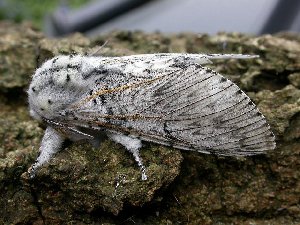
|
|
|
Puss
Moth © Neil Sherman |
|
The moth
that was of most interest during May was the Orange Footman,
which appeared in incredible numbers. There were 33 on the 17th, but
this was followed by a staggering total of 88 on the 19th! Numbers
dwindled off at the end of the month, with 20 on the 31st. This species
seems to be going from strength to strength in Suffolk at the present
time.
Traditionally,
micros start to pick up in May, but most of the
interesting ones were all seen right at the end of the month (31st).
They were Triaxomera
parasitella,
Monopis
weaverella, Plutella
porrectella (second
record), Epiphyas
postvittana
(2 - second site record), Cochylis
nana
(2), Ptycholoma
lecheana
and Myelois
circumvoluta.
The most
interesting daytime observation this month was a White Colon
(on the 27th - a new site record), found underneath the door of an
outdoor storeroom! Another strange discovery was a Brick caterpillar
inside one of the moth traps on the 20th - are larvae attracted to
light as well? A more normal observation were 2 caterpillars of the
Lesser-spotted Pinion, found by searching Elm for their 'tents' - 2
leaves spun together with silk that they hide in during the day.
Ipswich Golf Club - June 2004 - Neil Sherman
June 2004
was a month of highs and lows in moth recording - initially
the first part of the month was about average, with some warm nights
but also some cold ones, resulting in 60+ moth species appearing each
time the traps were run. Then, there was a fantastic period of warm
humid nights from the 7th through to the 16th, when the average total
of species appearing was 100+. This culminated on the night of the
16th, when 140 species were caught in the traps; up till that date the
best ever total for one night in June here. Some interesting species
were seen that night (more later). Then followed a period of wind and
much needed rain, when no trapping was undertaken. For the last few
days of the month conditions improved again, with traps being run on 3
more occasions. On the 29th, the last trapping night for the month the
June record was broken again. 159 species were caught (with a few more
still to be confirmed.).
The final
moth total for June was 355, the best June in the 10 years of
recording at the golf club. Within this large total, there were many
records of possible interest. Macros included the following (in
taxonomic order). Gold Swift (3 on the 14th, 3 on the 15th which
included a male, all other records being female, 1on the 16th and 3 on
the 28th). Fox Moth (all records of females, 2 on the 7th
followed by 3 on the 8th). Festoon (now annual at this site with 3 on
the 7th, 1 on the 8th, 14th, 16th, 29th). Peach Blossom (2 on the 14th
were the first for the year followed by one on the 16th, 2 on 28th and
3 on the 29th). Blotched Emerald (on the 13th, 14th, 3 on the 15th and
16th - a welcome return after a poor year in 2002 and a complete
absence in 2003). Clay Triple-lines (a male on the 15th was the first
for the site). Tawny Wave (6th, 3 on the 7th and 1 on the 8th - the
most number of first brood I have seen at this site). Least Carpet
(first for year, 27th). Spinach (14th - typically one record a year),
Small Waved Umber (second site record on the 8th). Shaded Pug (one on
the 8th). Sloe Pug (14th and 16th), Sharp-angled Peacock (on the 8th,
16th and 28th - first records for the site). V-moth (27th, in actinic
trap, first record since 1997). Lilac Beauty (28th), Grass Wave (a
female on the 7th trapped up on the heathland - 3rd record). Eyed
Hawk-moth (8th and 2 on the 29th). Small Elephant Hawk-moth (7th and 2
on the 8th). Poplar Kitten (2 - on the 7th plus another on 16th a new
species for the site does appear to be increasing in Suffolk at the
moment with more records). Orange Footman (a total of 75 for the month,
seen every trapping session). Dark Sword-grass (2 on the 13th). Grey
Arches (on the 14th and 15th). Alder Moth (2 records). Cream-bordered
Green Pea (2 seen on the 8th, another 28th). Silver Y (first in the
trap on the 13th). Herald (7th). Pinion-streaked Snout (2 on the 14th
followed by 8 on the 15th trapping in the wet woodland, 2 more 28th).
Shaded Fan-foot (first for the year 16th, on a typical date).
|
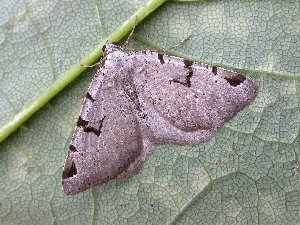
|
|
|
V-moth
© Neil Sherman |
|
Of the
micros, the following were of note at the site. Ectoedemia
decentella (2 on the
16th were the first site records - larvae mine Sycamore keys). Lampronia
corticella, the Raspberry
Moth (another first with records on the 15th and 16th). Nemapogon
clematella (2 on the 6th
followed by another on the 16th, yet another new species). Monopis
obviella (on the 6th with
2
more on the 16th). Caloptilia
populetorum (now annual at
this site after probable colonisation
a few years ago - plenty of food in the form of young Silver Birch
here!). Aspilapteryx
tringipennella
(second record on the 3rd). Cedestis
gysseleniella (one on the
14th). Cedestis
subfasciella (4 on the
7th, trapping up on the heath - foodplant is Pine). Argyresthia
glaucinella (29th -
second record). Eidophasia
messingiella (second record
on the 14th, 2 more 29th). Elachista
argentella (regular,
records most trap nights). Monochroa
palustrella (29th - second
record). Teleiodes
vulgella (28th and 29th -
first records). Stathmopoda
pedella
(second site record, 16th, a moth with a very
characteristic resting posture with its legs sticking out!). Pseudargyrotoza
conwagana (2 on the
7th followed by others on the 8th and 29th the first site records). Tortrix
viridana, the Green Oak
Tortrix reached its peak again this year in mid June, with at least 450
on the 16th (only a rough estimate as I didn't have time to count them
all, or the large number of wings around the traps left by the bats
that had eaten loads!). Celypha
cespitana (regular - a
moth with a smelly name!). Endothenia
quadrimaculana (6th -
first site record). Lobesia
reliquana
(another first on the 8th). Epinotia
rubiginosana (3 on the 7th
followed by 2 more on the 8th). Enarmonia
formosana, the Cherry
Bark Tortrix (15th again another first for IGC). Cydia
coniferana (7th, trapping
on
the heath, foodplant conifers - first for the site) .A nice attractive
moth (see picture). Anania
verbascalis (14th again
caught in a heathland area. Loads of the
food plant, Wood Sage here). Nascia
cillialis (second site
record after the first last year on the
8th). Nomophila
noctuella
(one on the 14th, first for the year). Capperia
britanniodactyla (3 in the
trap on the 29th). Adaina
microdactyla (second record
29th).
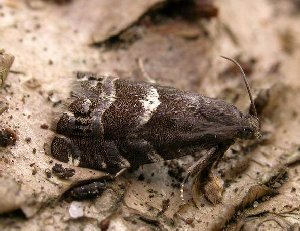
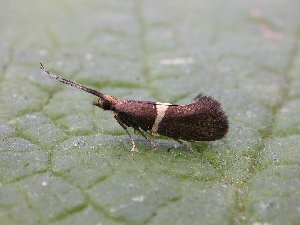
|
|
|
Cydia coniferana © Neil Sherman
|
|
Eidophasia messingiella © Neil
Sherman |
On top of
all these interesting records, the 16th stands out as being a
particularly good night with some even more notable moths. Among the
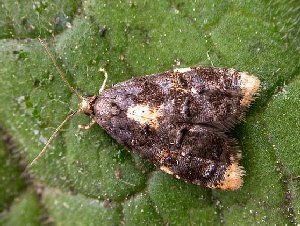
140 species were, starting with the micros: Spatalistis
bifasciana (only the
3rd recent record for Suffolk), Loquetia
lobella
(first site record of this unusual gelechid), Pexicopia
malvella (the Hollyhock
Seed Moth, another first, seen again on the 28th) and Gypsonoma
oppressana (2 individuals
- yet another first). On the macro front: Goat Moth (4th record for the
site, second of an adult moth - I have found 2 larvae here), Lobster
Moth (first for the year, and the first away from its usual woodland
haunts in the centre of the site) and a Red-necked Footman (probably a
migrant individual although there is some discussion whether there may
be a resident population at low density in Suffolk).
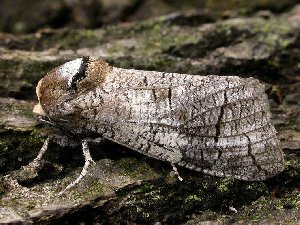
|
|
|
Goat
moth © Neil Sherman
|
|
Spatalistis bifasciana © Neil
Sherman |
The
sightings during the day around the site have also produced some
good records. Incurvaria
pectinea
mines were seen, on Birch (10th). The last Adela
rufimitrella of the year was
noted on the 1st, sitting on Ladies Smock, the foodplant. Also in the
same wet meadow, a worn Small Yellow Underwing was flushed on the 4th
(a new site record). Hopefully as the foodplant is present in that area
it will colonise in future years. Another adult moth record of interest
was a Lunar Yellow Underwing (8th), seen in a bunker, unfortunately
with one forewing missing!
From the
middle of the month, feeding signs of Broad-bordered Bee
Hawk-moth larvae have been evident on Honeysuckle all over the site, so
this species seems to be doing well at the present time. Also doing
well were some larvae of the Mullein Moth, although the Mulleins they
were eating didn't look well at all!
Bungay - June and
July - Leigh Davis
Leigh has sent in the following
records for June
and July.
June
Nymphula stagnata, Eurrhypara hortulata, Phlyctaenia coronata, Udea olivalis, Small Blood-vein,
Riband Wave, Common Carpet, Yellow Shell, Barred Straw, Common Marbled
Carpet, Barred Yellow, Sandy Carpet, Scorched Carpet, Swallow-tailed
Moth, Mottled Beauty, Small Elephant Hawk-moth, Cinnabar, White Ermine,
Heart and Dart, The Flame, Flame Shoulder, Large Yellow Underwing,
Lesser Yellow Underwing, Ingrailed Clay, Double Square-spot, Poplar
Grey, Small Angle Shades, Dark Arches, Middle-barred Minor and Silver Y
July
Leopard Moth, Scoparia ambigualis, Eudonia mercurella, Pleuroptya ruralis, Endotricha flammealis,
Single-dotted Wave, Small Scallop, Red Twin-spot Carpet, Dark-barred
Twin-spot Carpet, Magpie Moth, Clouded Border, Scalloped Oak, Early
Thorn, Privet Hawk-moth, Common Footman, Ruby Tiger, Lesser
Broad-bordered Yellow Underwing, Least Yellow Underwing, Nutmeg,
Campion, Clay, Smoky Wainscot, Spectacle and Common Rustic
Eye Moths - mid-April to early August 2004 - Paul
Kitchener
April
In my last
report I commented on the low numbers of Orthosias
this
spring, but they
did eventually pick up and, although slightly down on last year’s
totals, they were generally more numerous than in 2002. Scarce
Tissue on the 27th was a first site record and only the sixth
I’ve seen in Eye, the last being in 2000. Two Powdered Quakers this
month and another two in May was a welcome improvement on the singleton
last year. The Knot Grass is becoming increasingly frequent in Eye and
the first appeared on the 27th.
May
Catches were
unspectacular to say the least this month, with that on
the 14th probably being one of the best. Two micros that night were
firsts for the garden, Scrobipalpa
atriplicella and Mompha
epilobiella and there was
also the first Sallow Kitten and
Chocolate-tip of the year.
The few
other noteworthy moths this month were Phycitodes
maritima (fourth site
record following the three last year), Spruce Carpet (first of five
this year, singletons only in the previous two years), May Highflyer
(second consecutive good year), Small Waved Umber (with others in June
and August), Orange Footman (second site record on the 10th, first was
in 2002) and the first of only six Silver Ys this year, on the 26th.
June
Things could
only get better and, although the impression was one of
fewer moths than expected, it did get better, with several new garden
records and plenty of other interest.
Of the
micros, Ectoedemia
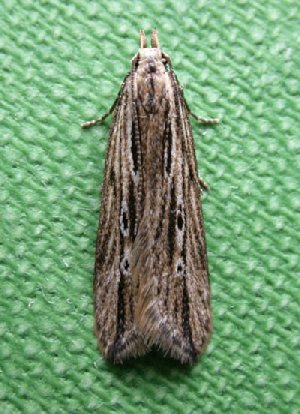
decentella
on the 14th, Monochroa
palustrella
(first of three on the 8th),
Bryotropha terrella (also on the
8th), Endothenia
quadrimaculana (10th)
and Lathronympha
strigana
(first of two on the 1st) were first records for the garden.
|
|
|
|
Monochroa palustrella © Paul
Kitchener
|
|
Other micros
notable for these parts were Nemophora
degeerella (second garden
record on the 8th, the first only last year), Argyresthia
cupressella (seven
individuals and first noticed last year), Plutella
porrectella (two records,
again only first recorded last year), Lozotaenia
forsterana (only one of the
year on the 13th), Ancylis
achatana, Cataclysta
lemnata
(only the third
in four years) and Phlyctaenia
perlucidalis (the first of
nine this year).
Macros new
to the garden were Blotched Emerald on the 16th (I’ve not
recorded this in Eye before), Brown Silver-line on the 14th
(surprisingly a first as I used to see it quite regularly in my
previous garden only ½ mile away), Bordered White on the 9th (I
last recorded this moth in Eye in 1998), Small Elephant Hawk-moth (two
individuals, the last records were five in 2000), Ingrailed Clay on the
10th (another moth that seems inexplicably scarce here, my last record
in Eye being in 1999) and Light Brocade on the 1st (a regular in my old
garden).
The list for
June also includes White-spotted Pug (the first of three
so far this year), Maple Prominent (two this year after a blank in
2003), Middle-barred Minor (evidently having another good year), Small
Dotted Buff (recorded for third consecutive year), Marbled White Spot
(only the third site record), Cream-bordered Green Pea (another good
year, maximum five on the 14th), Green Silver-lines (third site record)
and Buttoned Snout (now recorded in four of the last five years, with
all but one in May/June).
Moths that
have appeared in much lower numbers than previously at this
time of year have been Flame (exceptional numbers last year though),
Small Square-spot (three this year compared to nearly one hundred by
August last year) and Burnished Brass (only seventeen so far, whereas I
had seen over one hundred by the same time last year).
July
As we all
know the first half of July was wet, cold and often very
windy. The garden night time temperatures reached a low of 5°C on
the 5th and the maximum daytime temperature on the 9th was only
17°C with wind and rain. It was on this latter day that my first
Hummingbird Hawk-moth of the year chose to appear, briefly feeding at
some trailing geraniums by the living room window. It seemed all rather
bizarre, but it cheered me up no end.
Not
surprisingly trapping was at a minimum for a while and just about
everything of interest happened later in the month.
New micros
for the garden were Acleris
hastiana (two and the
first seen in Eye since 2000), Celypha
rosaceana (two
delightfully
pink individuals on the same night, 16th), Rhyacionia
buoliana on the 23rd
(also not seen in Eye since 2000), Homoeosoma
sinuella on the 22nd
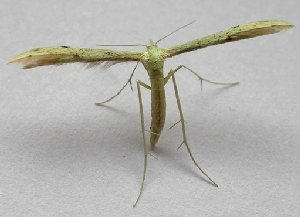
(also first Eye record) and the attractive,
small, pale yellow plume, Euleioptilus
carphodactyla on the 31st.
|
|
|
|
Euleioptilus carphodactyla ©
Paul Kitchener |
|
Other
notable Eye micros have included Brachmia
blandella, which was first
noticed only last year. Seventeen were recorded in an eight day period,
but the only gorse that I know of within a mile is a couple of scrubby
bushes beside the town centre car park.
Helcystogramma
rufescens (six
records), Enarmonia
formosana
on the 15th (second site record), Calamotropha
paludella (three records),
Nomophila
noctuella on the 28th (the
only one so far this year), Orthopygia
glaucinalis (three
records after a blank last year) and Nephopterix
angustella on the 14th (now
seen in four of the last six years)
were other species of note.
Macros seen
this month included the following “firsts” for the garden:
Lesser Cream Wave on the 14th (also a first record for Eye), Least
Carpet (the first of five records this year on the 14th and also not
seen in Eye before), Small Seraphim on the 16th (again I’ve not seen in
Eye before), Sharp-angled Peacock (the first of five records on the
22nd and the first time I’ve seen this in Eye), Clouded Brindle on the
10th (the first record since the five in 2000), Large Ear on the 28th
(gen. det.) and Oak Nycteoline on the 22nd (this moth was seen almost
every year in my old garden).
There was
plenty of other interest to be had on the macro front and an
Oak Eggar on the 29th was only the second site record and only the
fourth I’ve seen in Eye in nine years. A Common Lutestring on the 14th
was the third garden record. Brown Scallop on the 11th (second site
record), Dark Umber on the 19th (third site record and first since
2001), Dingy Shell (fourth record), Orange Moth on the 15th (second
site record), White Satin (another very good season, being seen nearly
every night), Round-winged Muslin on the 20th (third record),
Six-striped Rustic (first of the autumn, 29th), Gothic (fourth record
and apparently rationed to one a year), Southern Wainscot on the 15th
(second site record), Olive (two), Double Lobed (two), Rosy Rustic
(first of the autumn, 16th) and Herald (seven records this year, a
typical number) were amongst the best of the rest.
Comments
about numbers must be made for the following: Buff Arches are
almost non-existent, with only two being seen. I’ve only seen eight
Green Pugs so far (V-Pugs being far more numerous). Numbers of Clouded
Silver have also been very low with a total of twenty-two this year.
Compare this to the almost two hundred for June/July last year.
Brown-tail continues to be present, albeit in small numbers, being seen
every year since 2002, and only once in the six years prior to that.
Cabbage Moth has only been seen once so far this year and last year was
the best year ever for this species. Similarly for Common Wainscot,
with nine records only so far. On the positive side it has been an
exceptional summer for the Uncertain.
August
Hot and
humid weather at the start of this month has helped to fill the
trap to almost overflowing. Hoverflies have almost outnumbered moths on
occasions but three unexpected species have appeared and were first
records for the garden.
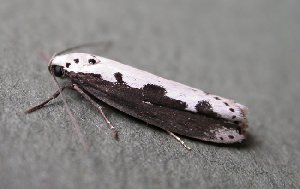
Ethmia
bipunctella was
represented by two individuals on the 1st and 2nd (this very attractive
little moth has dropped in on several places within the county recently
and not only on the coast). Dark Spectacle, also on the 1st and 2nd,
were second and third site records.
The next to
appear was a Webb’s Wainscot on the 6th and the very
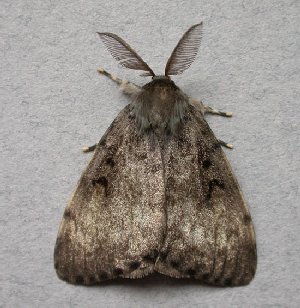
warm and humid night of the 8th, when the temperature dropped to no
lower than 20°C, produced a Gypsy Moth, a moth I hadn’t seen
anywhere before. Several
Canary-shouldered Thorns and Square-spot Rustics from the 1st
have shown that autumn is only just around the corner.
|
|
|
| Ethmia bipunctella © Paul
Kitchener |
|
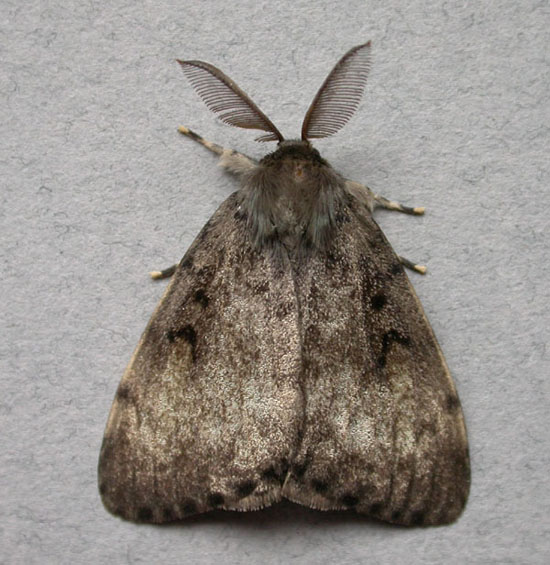
Gypsy Moth ©
Paul Kitchener |
Contact
details
Please send any Suffolk
moth records, moth articles or other queries to myself (preferably via
email) at :
3 Powling Road,
Ipswich,
Suffolk IP3 9JR
Email : tony@suffolkmothgroup.org.uk
Suffolk Moths
web site (home of the SMG): http://www.suffolkmothgroup.org.uk/
SMG Email
Discussion
Group:
http://groups.yahoo.com/group/suffolkmothgroup
Essex County
Moth
Recorder : Brian Goodey, 298 Ipswich Road, Colchester, Essex. CO4
0ET.
E-mail: essexmoths@dial.pipex.com
The
Newsletter
This is the newsletter
for the Suffolk Moth Group. It is available for download from the
Suffolk Moths website and subscribers can receive email notification
when new issues are produced.
Paper copy are available at a £2 per annum subscription. It is
usually intended for four issues
to be produced a year although the precise time of production varies. I
am
always on the look out for articles that will be of interest to moth
recorders
in Suffolk, although field and site reports should be topical. Please
contact me for publication deadlines as this varies with each issue and
tends to be flexible.
Adverts