Field
reports - Tony Prichard
SMG Moth Night at Lineage Wood - 6th May 2005
This mixed woodland site was visited with the intention of continuing
are search for Sloe Carpet, the species having previously been recorded
here in 1998. Given our recent luck in trying to track this species
down it was not too surprising that we did not manage to find it,
although weather conditions were not ideal. I suspect that this will be
one species that we will come across while recording and will be hard
to target unless we can find some sizeable blackthorn thickets. In all
37 species were recorded on the night with
Caloptilia robustella, Streamer,
Spruce Carpet, Oak-tree Pug, Orange
Footman, Powdered Quaker being the most noteworthy.
SMG Moth Night at Bonny Wood - 13th May 2005
This meeting was cancelled due to bad weather.
SMG Moth Night at Belton - 20th May 2005
A repeat visit to this site in one of the under-recorded areas of the
county. The last year's visit at this time of year suffered from low
temperatures. We fared better with 44 species including
Platyptilia gonodactyla, Grey
Birch, andMay Highflyer and new for the ten kilometre square Common
Swift,
Monopis weaverella,
Elachista maculicerusella,
Cochylis atricapitana, Red
Twin-spot Carpet, Small Seraphim, Flame Wainscot,
White-pinion Spotted, Lime Hawk-moth, White Ermine, Clouded Drab,
Hebrew Character and Oak-tree Pug
SMG Moth Night at Wyken Wood - 27th May 2005
This meeting was arranged by the Stanton Wildlife Action Group (thanks
to Phil Harding) and
included an invite for their members to come along and hopefully see
some moths at this ancient broad-leaved wood. The weather was a bit
against us with a bit of a breeze blowing and the only suitable site
for a sheet light, considering the number of people who had turned up,
appeared to be on the edge of a wood - not a good start. Although moths
were a bit slow coming to the sheet there was a bit of interest for
those who had come along. The traps placed further into the wood were
more effective and made up most of the species list for the night,
which finished at 113 species. Of note were
Nemapogon cloacella,
Caloptilia syringella,
Prayx fraxinella,
Phtheochroa rugosana,
Epinotia rubiginosana, Poplar
Lutestring, Cream Wave, White-spotted Pug, Grey Pug, Oange Footman,
Alder Moth, Clouded-bordered Brindle, Large Nutmeg and Green
Silver-lines.
Moth Night at Snape Warren - 29th May 2005
A heathland site where the RSPB has recently started management of the
site with some scrub clearance. As this was rather a blowy night the
lack of cover meant results were lower than expected with 44 species.
Amongst these were Fox Moth, Narrow-winged Pug, Peacock Moth, Barred
Red, Poplar Kitten,
Cream-spot Tiger, White Colon and Tawny Shears. Poplar Kitten appears
to be occurring more frequently at the moment with records from several
locations each year.
SMG Moth Night at Westleton Common - 3rd June 2005
This event was cancelled due to inclement weather and lack of apparent
interest. It appeared that some people did turn up for the event as
well as myself. However, while I was waiting at Westleton Common they
were waiting at Westleton
Heath.
It is always worth checking the grid references on the events list.
Moth Night at West Stow Country Park - 4th June 2005
While most of the moth group was away 'ticking' moths in France I ran
this joint meeting with Suffolk Branch of Butterfly Conservation. It
was not too surprising that no members turned up as the weather had
been wet and windy during the day but as evening approached conditions
improved. A good number of public turned up for the event and after the
initial wait for dark to descend there was a selection of colourful
moths to see at the two lights I ran near the visitor centre. This is
not one of the usual areas where we run lights and I managed to record
five new species for the site;
Rhyacionia
pinivorana,
Udea prunalis,
Chinese Character, Alder Moth and Pinion-streaked Snout from the
fifty-five species recorded in total. Other species of note included
Nascia cilialis, Small Phoenix,
Foxglove Pug,
Narrow-winged Pug, Peacock Moth, Small Elephant Hawk-moth, Cream-spot
Tiger, Great Prominent, Bird's Wing. Marbled White Spot and
Cream-bordered Green Pea
SMG Moth Night at Barton Mills - 10th June 2005
A cold night! A few stalwart locals came along to see the few moths
that were about. A measly 11 species! The habitat at this site
certainly looks very promising and we'll be returning hopefully with
better weather next year. Of possible note were
Parapoynx stratiotata, Cream-spot
Tiger, Small Clouded Brindle and Small
Square-spot
Moth Night at Wordwell - 11th June 2005
Another visit to one of our regularly visited sites in the Brecks with
reasonable conditions 71 species were recorded. Of interest were Cream
Wave, Fern, Sharp-angled Carpet, Haworth's Pug, Satyr Pug, Grey
Pug, Narrow-winged Pug, Barred Red, Small Elephant Hawk-moth, Great
Prominent, Four-dotted Footman, Cream-spot Tiger, Clouded Buff, Lunar
Yellow Udnerwing, White Colon, Pale-shouldered Brocade, Brown Rustic
and
Clouded-bordered Brindle.
SMG Moth Night at Old Hall Wood - 17th June 2005
Weather conditions improved in the latter half of June and this was the
first night where it looked as though we would have a good haul.
Initially I had some misgivings about this ancient woodland site, not
far from Ipswich, due to previous extensive coniferisation of the wood,
but some areas of broad-leaved woodland remain and it proved a very
productive night with 140 species recorded. Certain species turned up
in high numbers in the traps - Gold Swift, Festoon (100+) and
Epinotia dermarniana. A singleton
of a species I've not seen at light before
Alabonia geoffrella found its way
into one of the traps - more commonly recorded as a day-flying species.
Some recent arrivals to this part of the county
Pseudotelphusa scalella and
Spatalistis bifasciana were also
recorded. I suspect that there may be colonies of these latter two
species around the Bentley area after previous encounters with these
species in other woods in the area. A new moth for myself was
Esperia oliviella, a dark-coloured
micro, along the lines of
Eidophasia
messingiella but with a pale yellow basal patch as well as the
pale yellow cross-band. Quite localised in its distribution and with
the only other recent county record of the species being from Holbrook
in 2000 - a pleasant sight to find in one of the traps. Other
species of note were
Incurvaria
masculella,
Brachmia blandella,
Cochylis nana,
Lobesia reliquana,
Cydia
fagiglanda,
Cryptoblabes
bistriga, Blotched Emerald, Clay Triple-lines,
Cream Wave, Flame Carpet, Beautiful Carpet, Lobster Moth, Orange
Footman, Purple Clay, Grey Arches, Pale-shouldered Brocade and
Clouded-bordered Brindle.
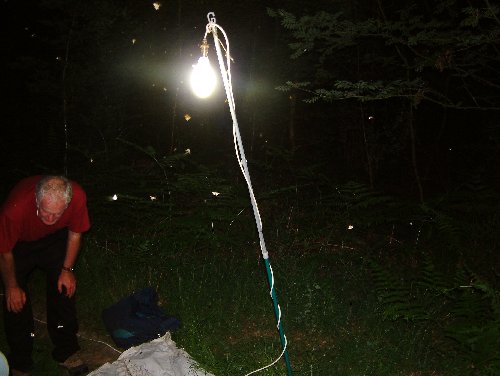
|
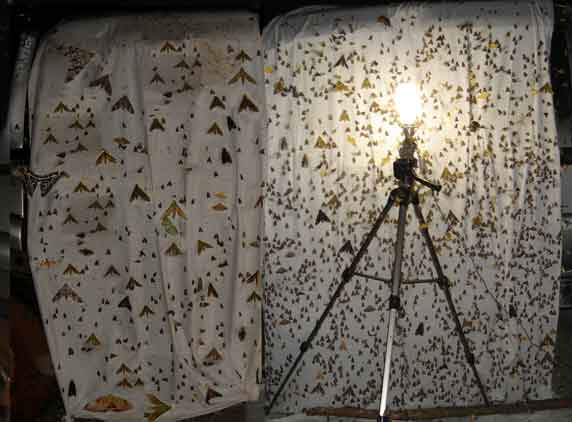
© Tony Prichard - activity around the sheet
|
Moth Night at Aldeburgh-Thorpeness - 18th June 2005
This site needs no introduction and can be a very productive site when
not windy. As there was a breeze blowing the four MV lights were placed
where we could find some shelter but with a total of 86 species record
the results were a bit disappointing in terms of numbers. There
were some highlights were Oblique Carpet, Water Ermine and Flame
Wainscot and others of note were
Phtheochroa
rugosana,
Schoeobius
gigantella, Fox Moth, Rosy Wave,
Sharp-angled Peacock, Small Elephant Hawk-moth,
Cream-spot Tiger, Dog's Tooth, White-point, Bordered Sallow and
Cream-bordered Green Pea.
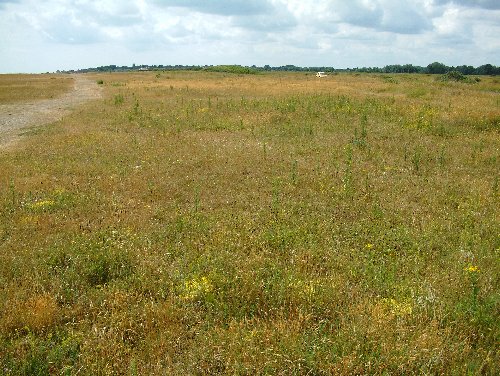
|
© Tony Prichard - looking towards Aldeburgh
|
Moth Night at Sizewell - 22nd June 2005
This visit was the first of a couple to search for Sand Dart amongst
the dunes near to the power station. Neil Sherman and myself had
previously looked for the larvae here - sieving the sand - with no
luck. With four MV lights spread out amongst the dunes, including
Matthew Deans' 'lighthouse' lamp. A reasonable selection of moths were
recorded with the total at the end of the night being 64 species. Given
that we were trapping in a coastal area it was interesting to pick up
six species of hawk-moth - Lime, Eyed, Poplar, Elephant and Small
Elephant with the best being a single Bedstraw Hawk-moth. On most other
nights this might have qualified as 'moth of the night' but not on this
occasion when a single
Crambus
pratella was also recorded at the sheet. This is a very rarely
recorded species in the county although some submitted records appear
to have arisen due to confuson with
Crambus
lathoniellus. There has been some suggestion that records of
this species may be of migrants but it is possible that a local colony
may exist with a previous record of this species having been reported
from the Thorpeness area in 1966 (de Worms & Aston). Other species
of note included Rosy Wave, May Highflyer, Cream-spot Tiger, Archer's
Dart, White Colon, Bordered Sallow, Large
Nutmeg and Bird's Wing.
SMG Moth Night at Ickworth Park - 24th June 2005
A rather dismal wet night that was saved by having a woodshed to
shelter under where we also ran the sheet light. Despite the conditions
a reasonable selection of moths turned up at the eight lights operated.
Most lights were concentrated in the ancient woodland with a couple on
the verges of the wood. It was noticeable that those lights under the
canopy performed rather poorly compared to those open to the sky. Of
the species recorded of most interest was a single Marbled Clover - not
a species I would expect to see much of away from the Brecks and
coastal areas. Other species of note recorded were
Prays fraxinella,
Archips crataegana,
Olindia schumacherana,
Celypha
rosaceana,
Scoparia
basistrigalis,
Ostrinia
nubilalis,
Phlyctaenia
perlucidalis, Blotched Emerald, Mullein Wave, Pretty Chalk
Carpet,
Scorched Wing, Orange Footman, Green Arches, White-point, Dusky
Brocade, Large Nutmeg and Small Clouded Brindle. In all 128
species were recorded.
Moth Night at Tangham Forest - 25th June 2005
After the rather dismal experience the previous night there was some
discussion about whether it was worth going anywhere on the Saturday
night, as conditions seemed very similar. Fortunately the optimists won
out and we plumped for one of our regular spots that is quite sheltered
and normally comes up with the goods. So it proved this time with more
species recorded at the lights (143 species) as well as greater numbers
of moths overall. Species of note recorded included Festoon (continuing
its good season),
Caloptilia
populetorum,
Eidophasia
messingiella,
Epermenia
falciformis,
Carpatolechia
proximella,
Cochylis nana,
Sitochroa
verticalis,
Pempelia
palumbella, Plain Wave, Small Seraphim, Peacock
Moth and Sharp-angled Peacock, Barred Red, Grass Wave, Orange Footman,
Cream-spot Tiger, Clouded Buff, Purple Clay, Grey Arches,
Clouded-bordered Brindle, Rosy Marbled and Shaded Fan-foot.
Moth Night at Southwold - 29th June 2005
This was the second trip out to look for Sand Dart with the species
having been previously recorded here in the past. After setting lights
up in the area of the Southwold Denes we did not have to wait long for
success with a Sand Dart being the first moth to the sheet light.
Overall moth numbers were rather low and only 29 species were recorded
- not too surprising given the restricted habitat. It was interesting
to note that numbers of Shore Wainscot and Sand Dart were largely
confined to those traps operating in amongst the sand dunes. Other
species of interest were
Anerastia
lotella, Rosy Wave, Large Nutmeg and
Crescent.
SMG Moth Night at Havergate Island RSPB reserve - 1st July 2005
Four people turned up for this event with an overnight stay on the RSPB
reserve, offering mainly saltmarsh habitats. After a couple of years
running where we have had to face rather windy and wet weather
conditions on the night looked reasonably favourable. Eight lights were
operated and left overnight. In the morning numbers of moths were
rather low but produced 81 species in all. Species of note included
Monopis monachella,
Goniodoma limoniella,
Anarsia spartiella,
Phalonidia affinitana,
Aphelia viburnana,
Celypha rosaceana,
Hedya ochroleucana,
Pediasia aridella,
Agdistis bennetii,
Marasmarcha
lunaedactyla, Ground Lackey, Rosy Wave, Shaded Pug, Plain Pug,
Garden
Tiger, Cream-spot Tiger, Water Ermine, Dog's Tooth, Mathew's Wainscot
and
Star-wort.
The determination of the
Aphelia
viburnana was not that straightforward. A few unusual tortrix
were present in some of the traps and two that I had looked extremely
good matches for
Choristoneura
lafauryana based on the plates in Razowski. As one individual
was a good match for the male form of
C.
lafauryana and the other was a good match for the female form it
seemed an outside chance that the moths would be anything else. On
returning from the trip Jon Clifton, who had heard of the
identifications, let me know how significant records of
C. lafauryana would be - previously
found only in Dersingham Bog in Norfolk and not noted since the 1970's.
A photo of the moth was sent out and opinion seemed to be that it was a
good determination. On consulting John Langmaid about the record he
mentioned that
Clepsis spectrana
would need to be eliminated (although they were unlike any
C. spectrana I have ever seen).
Following this the moths' genitalia were determined by Jon Clifton and
turned
out to be
A. viburnana -
quite a variable species and not that common in saltmarsh habitats in
Suffolk.
Thanks to Karen Coates for ferrying us around and putting us up for the
night.
Moth Night at Buxhall - 2nd July 2005
A privately-owned site in mid-Suffolk that is of interest mainly due to
its reed-bed but also with broad-leaved wet woodland. A useful venue
given the lack of sites in this area where we can record species
associated with reed-beds. A couple of lights were run along the
footpath next to the woodland and reed-bed and in all 83 species were
recorded. Of these the most notable were
Eidophasia messingiella,
Mompha ochraceella,
Orthotaenia
undulana,
Nymphula stagnata,
Green Arches, Clouded-bordered Brindle,
Large Nutmeg and Dotted Fan-foot.
SMG Moth Night at Lakenheath Fen RSPB reserve - 8th July 2005
A event intended to look for Marsh Carpet at this RSPB reserve, where
larvae have been occurring regularly in reasonable numbers in the last
couple of years. Prospects did not look at the start of the evening
with a strong breeze blowing across the reserve - not good when there
is little in the way of shelter out on the fens. A search for the moth
at dusk by John Chainey was unsuccessful and the lack of success
continued for the rest of the night. Moth numbers were again low with
only 77 species recorded. Included in these were
Endothenia quadrimaculana,
Calamotropha paludella,
Schoenobius
gigantella,
Evergestis
extimalis,
Sitochroa
verticalis, Spinach, Grey
Carpet, White Satin, Garden Tiger, Dog's Tooth, Dingy Shears, Double
Lobed, Silky Wainscot, Bordered Sallow and Dotted Fan-foot. We do not
seem to be having much luck tracking down the Marsh Carpet adults at
this site.
National Moth Night at Wordwell - 9th July 2005
A joint meeting with Suffolk Branch of Butterfly Conservation.
Attendance was rather poor with only four people turning up - and that
included John Chainey and Jenny Spence from out of county. On arriving
at the site it was a bit of surprise to see that an earth bank had been
thrown up across the track that we normally use to get to the site.
After some quick consultation with the map it looked as though we could
still reach the site by a rather circuituous route. Not an ideal night
and certainly not as good conditions as we have had previously on
National Moth Nights. Amongst the 81 species recorded were several of
interest -
Ethmia dodecea,
Pempeliella dilutella, Large
Twin-spot Carpet, Royal
Mantle, Wood Carpet, Fern, Toadflax Pug, Clouded Magpie,
Four-dotted Footman, Grey Arches, White Colon, Broom Moth and Slender
Brindle. The Wood Carpets producing the usual debate on distinguishing
them from Common Carpets. A single Beautiful Hook-tip was a good record
as this species now seems quite infrequently recorded in the county -
with scattered records at infrequent intervals. The catch of the night
was made by John and Jenny while we were clearing the traps away, a
Cloaked Pug on the outside of the trap. A rare immigrant, associated
with conifers, that might just possibly be resident in the area -
although there have been no recent records in this frequently recorded
part of the Brecks. A high note on which to end the night.
Moth Night at Bawdsey Marsh and Shore - 13th July 2005
A site with saltmarsh and vegetated shingle habitats. The lights on the
saltmarsh fared not so well while those on the shingle brought in most
of the interest. These included
Ostrinia
nubilalis,
Agdistis bennetii,
Ground Lackey, Least Carpet,
Lilac Beauty, Kent Black Arches, White-line Dart, Mathew's Wainscot,
Star-wort, Crescent and Dark Spectacle. 75 species in total.
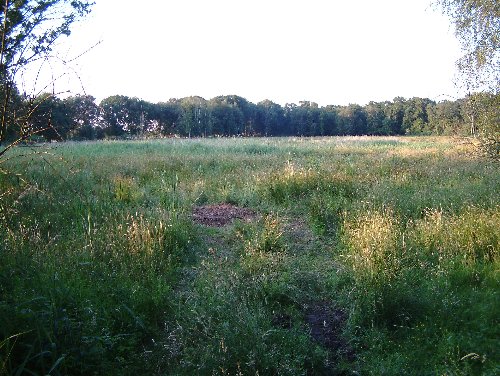
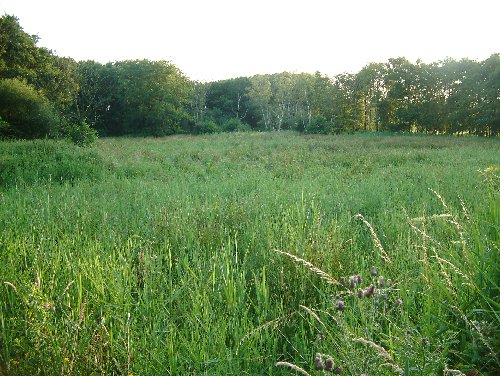
SMG Moth Night at Redgrave Fen SWT reserve - 15th July 2005
A follow-up visit to the Suffolk part of this SWT reserve where the
habitat appears greatly improved since the site management made the
area look a bit like a moon-scape. Targets for the night included Fen
Square-spot and Lempke's Gold Spot, recorded at a previous group visit.
As we had also recorded Silver Barred on the previous visit there was
always the possibility that this may turn up again if colonisation had
occurred. While looking around for sites to run the lights the larvae
of Valerian Pug were noted on its foodplant. Of the 164 species
recorded the most notable is probably Brachmia inornatella - a rather
localised species in Suffolk. Also of interest were
Anarsia spartiella,
Brachmia blandella,
Acleris
holmiana,
Apotomis capreana,
Rhopobota naevana,
Pediasia contaminella,
Schoenobius gigantella,
Donacaula forficella,
Evergestis pallidata,
Pempelia formosa, Small
Scallop, Garden Tiger,
Suspected, Lunar-spotted Pinion, Slender Brindle, Double Lobed,
Crescent, Bulrush Wainscot, Brown-veined Wainscot, Webb's Wainscot, Fen
Wainscot, Small Rufous, Nut-tree Tussock, Herald and Dotted Fan-foot
|
|
| ©
Tony Prichard - Redgrave Fen |
Moth Night at Tangham Forest - 16th July 2005
A repeat visit this site with mixed woodland and fen habitats. Yet
again this site came up with a good species list and some species of
interest. A single Red-necked Footman lurked for a while on the sheet
mimicking a caddis fly before being spotted. There has been some
discussion as to whether this species may be locally resident at low
density. There were certainly few migrants around at this time and the
moth is now recorded annually in the county. Rosy Marbled has now been
recorded more than once at the site and along with the record from
Staverton Woods would seem to point towards a local colony. Included in
the total of 114 species recorded were
Orthotaenia undulana,
Anania verbascalis, Grass Emerald,
Common
Lutestring, Plain Wave, Large Twin-spot Carpet, Broom-tip, Peacock Moth
and Sharp-angled Peacock, Purple Clay, Dotted Clay,
Broom Moth, Bird's Wing, Slender Brindle and Dotted Fan-foot.
Moth Night at Kessingland Sewage Works - 21st July 2005
A site we had not visited before but rather popular with the birding
fraternity I gather and surprising given the rather ripe smell in the
air. As there is a local effort to try to gain SSSI status for part of
the site we went along to see what moths of interest might be found. In
the company of the Lowestoft Lounge Lizards (something to do with
birding
again) we had rather a successful night, although the hoped for
reed-bed specialities failed to appear. From four MV lights we had a
total of 118 species. Of most note were Water Ermine, Kent Black Arches
and Muslin Footman. The latter being known from around this area of the
county but still a new site for this very local species in Suffolk.
Other species recorded included
Agapeta
zoegana,
Epiblema foenella,
Calamatropha paludella,
Scoparia
basistrigalis,
Phlyctaenia
perlucidalis,
Pempelia formosa,
Garden Tiger, Suspected,
Dingy Shears, Cream-bordered Green Pea and Herald.
SMG Moth Night at Trimley Marshes SWT reserve - 22nd July 2005
Under the lights of Felixstowe Port with low temperatures prospects did
not look good for this evening. As little moth recording work has been
done at the site though all records were of interest. With reed-bed and
saltmarsh habitats there were no big surprises in the 54 species
recorded, including
Agriphila
selasella,
Agdistis bennetii,
Least Carpet, Garden Tiger,
Mathew's Wainscot, Reed Dagger, Crescent, Brown-veined Wainscot and
Cream-bordered Green Pea. The site should certainly be more productive
than this with better conditions based on the appearance of the habitat.
Moth Night at Minsmere RSPB Reserve - 23rd July 2005
The target of this evening was the Butterbur moth, with previous
records from the vicinity of Eastbridge. As the Eastbridge area did not
offer much in the way of shelter and as there was a bit of a breeze we
set
up a couple of lights next to the Butterbur and then went off to the
Island Mere part of the reserve to run the rest of the lights in more
sheltered positions. We need not have been so concerned as even the
more exposed traps in the Island Mere area were full of moths. Over
twenty White-mantled Wainscot were recorded, mainly in those traps
closest to the Island Mere hide, but no Fenn's Wainscot. Other species
of note amongst the 153 species recorded were
Monopis monachella,
Thiotricha (=
Reuttia)
subocellea,
Endothenia quadrimaculana,
Calamotropha paludella,
Platytes alpinella, Small Scallop,
Flame
Carpet, Blue-bordered Carpet, Foxglove Pug, Sharp-angled Peacock,
Garden Tiger, Kent Black Arches, White-line Dart, Reed Dagger, Slender
Brindle, Crescent, Small Rufous,
Cream-bordered Green Pea, Scarce Silver-lines, Dark Spectacle and
Dotted
Fan-foot.
T. subocellea, a
species feeding on Water Mint as a larva, was of interest as it seems
to have cropped up in a few places this year. After closing down the
traps in the Island Mere area it was back to Eastbridge to see if any
Butterbur had turned up. Unfortunately not but 95 other species had. Of
these
Phtheochroa inopiana,
Eucosma campoliliana, Garden Tiger,
Short-cloaked
Moth, Reed Dagger, Olive, Double Lobed, Cream-bordered Green Pea and
Dotted Fan-foot were of most interest. This brought the species total
for the night to 178 - an impressive total. As seems to have become a
bit of a habit we totalled the number of species with Wainscot in their
name that had been recorded. This indicated that it had been a good
night with ten Wainscot species recorded at both sites - Southern,
Smoky, Bulrush,
Twin-spotted, Brown-veined, White-mantled,
Webb's, Fen, Silky and Small. If only Common or Fenn's Wainscot had
turned up.
SMG Moth Night at North Cove SWT reserve - 29th July 2005
As far as I am aware the group has not previously visited this reserve
near Barnby on the Suffolk-Norfolk border. Offering wet woodland and
fen habitats combined with favourable weather meant that prospects were
good for the night. I had previously arranged this visit to see if we
could pick up Fenn's Wainscot - there is an old record from the area
and confirmation that it was still resident in the area would have been
useful as it is a distance from it's usual haunts on the coast. Five MV
lights were operated in both habitats. The sheet light kept us busy
till the first trap round when all the traps were found to be rather
busy. We had been joined again by the Lowestoft Lounge Lizards and they
were in for rather busy session, with plenty of interest to see. As we
closed down the traps the total started to creep towards the 200 mark
but in the end stopped short at 196 species. However, there a few
micros still to determine and this should push the night's list of the
200 mark. Species of note recorded were
Ypsolopha nemorella,
Orthotelia sparganella,
Athrips mouffetella,
Scrobipalpa costella,
Thiotricha subocellea (again),
Rhopobota naevana,
Epiblema foenella,
Agriphila selasella,
Nymphula stagnata,
Evergestis
pallidata,
Ostrinia nubilalis,
Cryptoblabes bistriga,
Dioryctria
sylvestrella, Flame Carpet, Phoenix, Chevron, Blue-bordered
Carpet,
Slender Pug, Haworth's Pug, Marsh Pug, Triple-spotted Pug, Small
Seraphim, Magpie, Garden Tiger, Slender Brindle, Double Lobed, Small
Wainscot, Silky Wainscot, Dark Spectacle and Dotted Fan-foot. This was
by far the best night so far this year and is unlikely to be surpassed
this year.
Reports
from Recorders around the county
Records reported in
this section have not been checked by the Suffolk Moth Panel. Many
thanks go to the recorders who provide write-ups for this section.
Eye Moths, March to mid-August 2005 - Paul
Kitchener
March
An
Acleris hastiana on the
23rd was probably the only notable moth of
the month (two more were seen in July). Common Quaker, Clouded Drab and
Hebrew Character all had their worst year out of four, at this site,
with just a third of the numbers of 2003. This in spite of the earliest
start (seen in January) ever for Common Quaker and Hebrew Character.
April
A quiet month, the night of the 30th producing the most interest with
Lesser Swallow Prominent (the first of six this year following none
last year), Buttoned Snout (the fifth site record and has now been seen
every year in the last four) and two
Esperia
sulphurella in cop. on
the
trap perspex.
For the second consecutive year first generation Early Thorn were
almost non-existent, only two being seen (at the time of writing only
one of the second generation has been trapped).
May
There were first site records for
Callisto
denticulella on the 27th and
Shears (long overdue), four of the latter between 25th and 15th June.
Following the hottest May day for 60 years the night of the 27th was
also notable for
Plutella xylostella
(four of the twelve seen this year
on this one night), the first Figure of Eighty of the year (fourteen
being seen this year, only five last year), May Highflyer (three, with
five in three days), Treble Bar (only the second site record), the
first Clouded Silver of the year (numbers of this moth have been well
up on last year, peaking with twenty six on 23rd June) and the first
Silver Y (of only seven this year, so far).
A Currant Pug on the 1st was the first of six this year, none at all
being seen last year, but strangely only one Mottled Pug has been seen,
this on the 26th.
Eurrhypara
hortulata has had an exceptional year, the
first appearing on the 25th. This year’s total of 126 compared to the
last three year’s of 23, 72 and 28. Another moth that has had it’s best
year at this site is Bright-line Brown-eye. First seen on the 15th and
peaking in early July the four year’s totals are 53, 53, 62 and 182.
All the regularly occurring hawk-moths had a very good season with Lime
and Privet both appearing by the end of May. The total for Elephant
Hawk-moth reached 67 individuals by mid-July which is more than twice
the previous best total.
Ruby Tiger was seen in May (3rd and 6th) for the first time in nine
years, it usually appearing in mid-July (in contradiction to flight
period statements in both Skinner and Waring). Two species that have
been much more evident this year than last are Heart and Dart and Flame
(individual totals being 192/319 and 221/422 respectively).
Other occurrences of local interest this month were the third site
record of Orange Footman, the second site record of Light Brocade
(both, 26th) and the second site record of Mullein (13th).
June
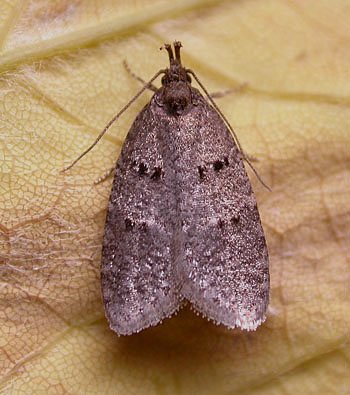
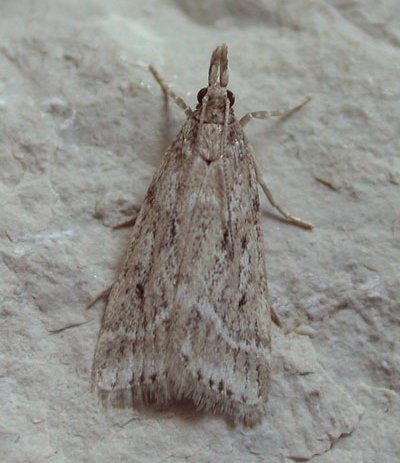
Six species were seen in the garden for the first time.
Luquetia
lobella (2nd, another on 23rd),
Eudonia pallida, Bird’s Wing (both,
18th with another of the former, 25th),
Agapeta zoegana (22nd),
Scythropia crataegella and
Rhyacionia pinivorana (both, 23rd).
|
|
© Paul Kitchener - Luquetia lobella
|
© Paul
Kitchener - Eudonia pallida
|
Several species were seen in greater numbers this year than in any of
the previous three years at this site. These included
Phlyctaenia
perlucidalis (twelve between 17th and 17th July),
Lozotaenia forsterana
(sixteen between 17th and 23rd July, more than double the previous
grand total),
Udea olivalis
(forty five between 2nd and 14th July),
Common Emerald (twenty four, only nine seen before), Treble Brown Spot
(thirty four, the previous best total was sixteen in 2003), Barred
Straw (forty six, only eight last year), Swallow-tailed Moth (forty
three between 24th and 23rd July), Dot Moth (‘02 - ‘05 numbers being
17/44/9/112), Poplar Grey (12/21/13/34), Sycamore and Small Angle
Shades (both double last year’s totals). In contrast, only one Small
Square-spot of the first generation was seen and it has remained scarce
this autumn, with only three individuals. There was a decline of this
moth over the previous four years, the total individuals for 2001 to
2004 being 264/223/48/7.
First records aside there was plenty of other interest in June,
especially during the second half when minimum night time temperatures
at last got into double figures. There was the fourth site record of
Schoenobius gigantella (the
fifth on 1st July), third record of
Sciota
adelphella (23rd, the previous two in 2003), second
Amblyptilia
acanthadactyla (also 23rd), second Twin-spot Carpet (27th), a
little
run of four Brown Silver-line (first record was only last year), fourth
record of Maple Prominent (another in July), only the second Ingrailed
Clay, four Green Arches (only one previous record, in 2002), four
White-point (between 16th and 19th, five more in August) and the third
Dark Brocade.
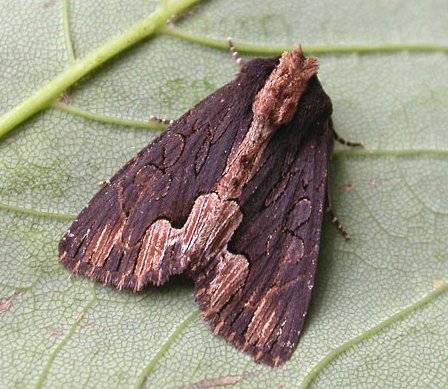
|
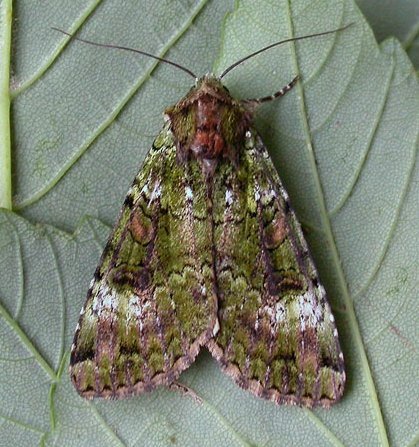
|
© Paul Kitchener - Bird's Wing
|
© Paul
Kitchener - Green Arches
|
Moths seen this month but not recorded at all last year were Freyer’s
Pug (four), Heart and Club (two; has consistently remained scarce in
Eye), Dusky Brocade (three), Small Clouded Brindle (three), Beautiful
Golden Y (ten) and Plain Golden Y (five).
So far eight Dark Spectacle have been trapped this year including the
first ever June record (25th). This moth seems to be established in the
area having been recorded in three of the last four years with fourteen
of the fifteen individuals in July, August or September.
Two moths that had a very poor 2004 made something of a recovery this
year. Buff Arches was noted only twice but this year fifteen
individuals were recorded in a four week period and forty Mottled
Beauty were seen in three weeks compared to six last year.
July
As in June six new species were recorded in the garden this month, four
of them macros and three of these on the same night.
Short-cloaked Moth was seen frequently, every year, in my previous
garden, half a mile away, but one on the 9th was the first in four
years at this site. Also on the 9th a Peach Blossom (with another on
the 13th) and a Shark were new, but not entirely unexpected. The other
firsts were
Morophaga choragella
(27th),
Hedya salicella
(10th) and a
Slender Pug (23rd).
Although nothing exceptional was seen this month, perhaps due to the
changeable weather, it would be a very poor July indeed that didn’t
provide some interest and variety. An
Ypsolopha
sequella (7th) was the
first since three in 2001. Seven
Monochroa
palustrella were seen
between 7th and 30th and a
Mompha
propinquella (21st) was the third
record.
Lozotaeniodes formosanus
is always nice to see and one on the
10th was the first for two years. An
Epiblema
foenella on the 1st was
only the seventh record and a
Eucosma
obumbratana the second record on
the 26th. Two
Calamotropha paludella
(tenth and eleventh records),
Ostrinia nubilalis (the second
site record, 3rd),
Ebulea crocealis
(second, with another in August) and
Galleria
mellonella (only the
second record, the first in 2001) complete the list of notable micros
for the month.
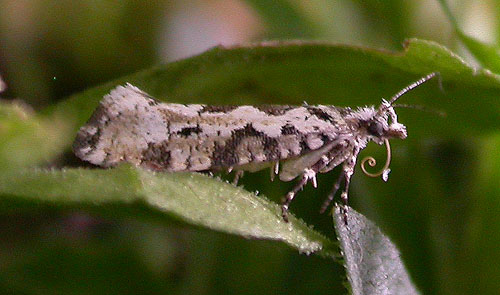
|
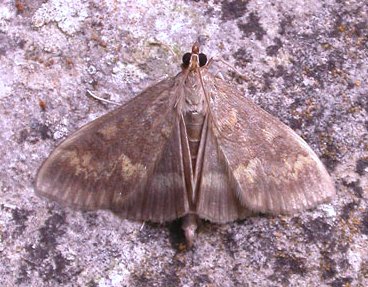
|
© Paul Kitchener - Ypsolopha sequella
|
© Paul
Kitchener - Ostrinia nubilalis
|
It was pleasing to see a Least Carpet on the 18th and, although this
was the only one, it may indicate that this species is now established
in the area, having been seen for the first time last year. Large
Twin-spot Carpet and Small Rivulet had their best year ever (twenty
three of the former in a four week period was more than occurred during
the previous three years combined). A total of six Maple Pug, all in
the last week of the month, was also good, four of them coming to
actinic on the 29th.
Others of local interest were Tawny-barred Angle (fifth record, 10th,
the same night as the
L. formosanus,
another Scots Pine feeder), Lilac
Beauty (only the third record, 1st), Orange Moth (three, having
occurred only twice before), True Lover’s Knot (second record, 11th),
Gothic (now seen as singletons every year for five years) and Clouded
Brindle (second record, 7th).
Scarce Footman is living up to it’s name, with only three being seen so
far, whilst Common Footman has been in larger numbers than ever. The
sight of the first Canary-shouldered Thorn of the year always triggers
thoughts of autumn and this year this happened on the 26th.
August
So far there have been four new species recorded this month:
Altenia
scriptella, quite a distinctively marked gelechiid on the 2nd,
Phoenix
(6th), Oak Hook-tip (another moth that was frequent every year in the
old garden, but I was surrounded by oaks then) and Fen Wainscot (10th).
It has been a poor year for migrants, only seven Silver Y (one this
month) and one Dark Sword-grass (5th) but five White-point have reached
the trap from somewhere this month (9th-18th).
No Iron Prominent of the first generation were seen at all and only
five have been seen this month. The first Bulrush Wainscot since 2002
was sitting next to the Fen Wainscot on the 10th, a Red Underwing was a
very welcome sight on the 17th (none being seen last year) and a
Pinion-streaked Snout was a second garden record on the 18th. Two
Nephopterix angustella (17th
and 18th) have brought the year total to a
best ever five.
Many "autumn" species are now well underway with Dusky Thorn,
Square-spot Rustic, Six-striped Rustic, Copper Underwing, Straw
Underwing and Mouse all appearing by the 9th.
News
from Woolpit - Paul Bryant
May -
Like everywhere else, it has been a very poor start to the year
and it was not until the latter part of the month that things finally
started to pick up in the garden. A Scarce Tissue attracted to a
lighted window on 3 May looked like it might be the start of a run of
records - akin to last year - but, alas, this was the only sighting.
The weather finally improved enough to allow regular trapping during
the last week of the month. However, this only produced singles of the
commoner garden species - Common Swift, Buff Ermine etc.
June -
Very little trapping took place during the first few weeks of
the month. The highlight was a call from a neighbour to have a look at
a large grey moth that was sitting on the side wall of their house.
From the description I was expecting to see a Poplar Hawk-moth but was
pleasantly surprised when it turned out to be a freshly emerged Privet.
Then it dawned on me, their garden is surrounded by a 4' high privet
hedge! Two days later I caught it, or another (there was no easy way of
telling), in my garden trap. Odd singles were then caught on a few
other days throughout June.
Other June highlights were single Cream-bordered Green Pea (19th) and 2
Varied Coronet, 4 Buff-tip and a Swallow-tailed Moth picked out amongst
the 40 species recorded at actinic light on the 23rd - the highest
species count so far this year.
July -
After a three or four week break what appears to be the last
Privet Hawk-moth of the season was trapped on the 29th. More amazingly,
three came to my trusty actinic on the first day of the month (when a
total of 34 species were recorded).
Scalloped Oak was fairly regular throughout the month, albeit mostly in
one's or two's (max 4 on 21st). Other July highlights were two new
additions to the garden list - a White Satin and the micro
Stathmopoda
pedella - with its funky leg action - both on the 29th. The
latter is
apparently an alder feeder and, despite being quite distinctive, is not
a species that I recall seeing out anywhere with the group before or in
our travels further afield.
August -
I know we are still only mid month but I just thought I would
squeeze in details of two more additions to the garden list at the
start of the month - Least Carpet on the 1st and Oak Eggar on the 2nd.
Happy trapping
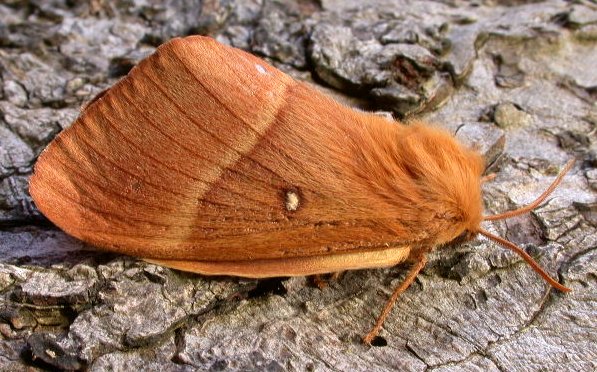
|
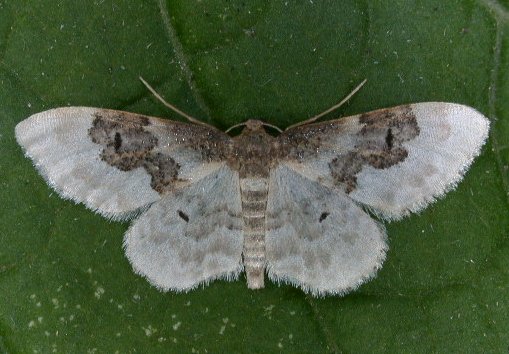
|
© Paul Bryant - Oak Eggar
|
© Paul
Bryrant - Least Carpet
|
Bungay, June and July 2005 - Leigh Davis
Leigh has sent in the following records for the months June and July
this
year -
Chrysoteuchia culmella,
Dipleurina lacustrata,
Eudonia mercurella,
Eurrhypara hortulata,
Phlyctaenia coronata,
Pleuroptya ruralis,
Pempelia formosa, Buff Arches,
Small Emerald, Small Blood-vein, Small Fan-footed Wave, Single-dotted
Wave, Riband Wave, Red Twin-spot Carpet, Common Carpet, Yellow Shell,
Spinach, Barred Straw, Common Marbled Carpet, Small Rivulet, Green Pug,
Clouded Border, Swallow-tailed Moth, Mottled Beauty, Common Wave,
Clouded Silver, Privet Hawk-moth, Poplar Hawk-moth, Elephant Hawk-moth,
Pale Prominent, Yellow-tail, Common Footman, Ruby Tiger, Heart &
Club, Heart & Dart, Flame, Large Yellow Underwing, Lesser Yellow
Underwing, Lesser Broad-bordered Yellow Underwing, Ingrailed Clay,
Double Square-spot, Cabbage Moth, Dot Moth, Pale-shouldered Brocade,
Bright-line Brown-eye, Broad-barred White, Campion, Varied Coronet,
Clay, Smoky Wainscot, Suspected, Sycamore, Brown Rustic, Small Angle
Shades, Dark Arches, Small Clouded Brindle, Marbled Minor, Tawny
Marbled Minor, Middle-barred Minor, Burnished Brass, Silver Y,
Beautiful Golden Y, Spectacle, Snout and Fan-foot.
Moths at Ipswich Golf Course - May to July
2005 - Neil Sherman
May can be summed up as such - warm, cold, warm! The month started with
a cracking night on the 1st, when 52 species appeared in the traps.
That was it basically for the first period. Things improved again late
on, with a wonderful spell of hot sunny daytime weather around the 25th
- 27th. The best species count for May occurred then, with 83 species
noted in the 2 traps on the 26th, including some moths of local
interest (more later on this). A few days later, it was cold again,
with 2 traps catching a measly 18 species on the night of the 31st.
Lights were operated on 6 nights in total during the month, producing a
species total of 159 (108 macros, 51 micros), better than 2004 when 129
species were recorded.
Macros of possible interest included the following. Fox moth (25th,
very tatty due to being walked on by the 200+ Maybugs in the trap as
well!), Red-green Carpet (1st and 26th), Dwarf Pug (18th), Brindled Pug
(an amazing total of 66 trapped on the 1st), Seraphim (2 on the 18th
followed by another on the 26th). Sharp-angled Peacock (26th
reappearing after the first records last year). Small Elephant
Hawk-moth
(23rd), Lunar Marbled Brown (4 for the month, still in low numbers this
year). Orange Footman (106 noted during the month - this is now a very
common species here). Silver Y (25th first for year) and finally a new
macro for the site, the Coronet (26th). This is only the second time
I've seen this species in Suffolk, the other being on the west side of
the county.
Micros of possible note were
Cedestis
subfasciata (25th),
Phtheochroa
rugosana (2 on the 26th),
Lobesia
reliquana (26th, second site record),
Ancylis upupana (second record
25th),
Pseudococcyx posticana
(1st, a
new site record) and
Argyresthia
trifasciata (26th, another new species
for the site).
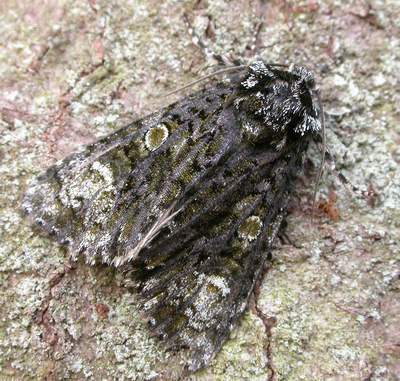
|
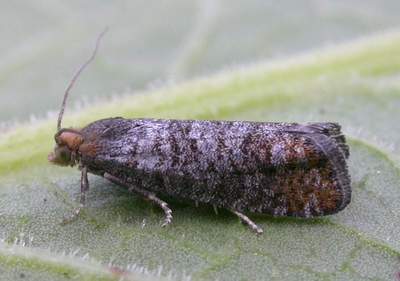
|
© Neil Sherman - Coronet
|
© Neil Sherman - Pseudococcyx posticana
|
Daytime sightings included
Adela
rufimitrella (on Ladies Smock) and
Micropterix calthella (on
buttercup flowers), both were common during
the month in the wetland areas of the site. Mother Shipton moths were
also noted at the end of the month, flying up on the open heath areas.
I was away on holiday in France at the start of June, so trapping did
not begin until the night of the 9th. Lights were run on 8 other
nights, mainly during the second half of the month when there was a
spell of hot weather. This brought in many interesting species,
including a macro new to Suffolk (more on this later). The best night
was within that period - the 30th, when 149 species were recorded. Moth
species total for the month was 262 (146 macros, 116 micros), lower
than last year's impressive 366 species (conditions were much better
for trapping for longer then).
Macros of possible note at this site included the following. Gold Swift
(3 on the 21st), Festoon (a total of 18 during the month). Poplar
Lutestring (uncommon here, one on the 14th). Grass Emerald (28th -
first for year), Blotched Emerald (18 recorded - a good year), Satin
Wave (one on the 21st). Spinach (22nd + 30th), Oak-tree Pug (a late one
on the 28th). V-moth (22nd, found settled well outside the trap,
following on from one last year after a few year's absence). Privet
Hawk-moth (2 not all that common here in the last few years so nice to
seen
more than one), Eyed Hawk-moth (3 records), Small Elephant Hawk-moth
(6, a good
year). Lobster (21st, seen while trapping in the woodland), Lunar
Yellow Underwing (30th, first for year), Purple Clay (21st, again seen
within the woodland). Gothic (20th, a new macro for the site), Grey
Arches (23rd, the only one so far this year). Dingy Shears (28th),
Small Clouded Brindle (14th, another new macro for the site), Rufous
Minor (30th, confirmed by dissection), Scarce Silver Lines (28th),
Shaded Fan-foot (14 seen during the month).
The highlight of the month was the appearance of an Olive Crescent in
the trap on the 22nd, not only a new moth for the site but
also a new species for Suffolk. Others were recorded in both Kent and
Dorset at around the same time, suggesting they were migrants.
|
© Neil Sherman - Olive Crescent
|
Micro numbers increased in the traps as the warm weather arrived, with
some of possible note for the site. This included
Ectoedemia
hannoverella (4 records of adults in the traps, mainly in the
vicinity
of Poplars).
Lampronia corticella
(2 records, first seen here last
year),
Morophaga choragella
(2 records of this large tineid).
Luquetia
lobella (second site record, 20th),
Pexicopia malvella (the Hollyhock
seed moth, 4th and 5th records). Tortrix included
Cochylis nana (5
records),
Lozotaenia forsterana
(3 of this large tortrix species, a
good year).
Aleimma loeflingiana
(1377 recorded during the month, now
the second commonest species recorded here!),
Tortrix viridana (1369
recorded during the month, still just the commonest species here but
being caught up by
Aleimma
loeflingiana!).
Acleris
logiana (23rd and
30th),
Orthotaenia undulana
(21st, a new site record),
Epinotia
demarniana (2 records, another new site record),
Gypsonoma oppressana
(3 records). Other micros seen were
Capperia
britanniodactyla and
Eudonia pallida (3 recorded, a
good year).
Moths noted during the day included 3 that were new to the site:
Adela
croesella (14th),
Narycia
monilifera (24th, found in the polytunnel,
one of the bagworm moths) and
Alabonia
geoffrella (15th, again found in
the polytunnel). Also noted were 2 Mother Shipton moths, disturbed from
the acid grassland around the site.
July is traditionally the best month for moth recording, and this year
has been no exception. In fact at this site it has been the best July
since recording began (this is probably due to more moths being
retained in the 2 Robinson traps I use now). 393 species were seen (196
macros, 197 micros), compared to last year when there were 370 species.
Traps were operated on 11 nights, mainly during the first 2 weeks and
the last week when conditions were warm. A cold wet spell mid month
stopped recording for a short while. It was during the early warm spell
that the best nights trapping total was noted - 182 species on the 3rd
(this total also broke IGC's record for one night - 181 seen in July
last year).
Here are the macros of possible note for this site. Gold Swift (17th),
Leopard Moth (the 15 noted on the 10th was exceptional, normally only
see one or two in a night). Festoon (68 noted during the month - record
numbers. This species has been seen in good numbers at a few sites in
Suffolk this year). Oak Eggar (2 females on the 28th), Common
Lutestring (3 records). Small Emerald (2 records), Least Carpet (5
records, a good year. This species continues to increase across the
county). Gem (13th, a female, the second site record). Chevron (2
records), Barred Yellow (3rd, a good record for the site as it is quite
scarce here). Sharp-angled Peacock (3 records), Bordered Beauty (3 seen
on the 17th), Lilac Beauty (only one this year on the 14th). Orange
Footman (17th - an unusual date, well outside its normal flight
period). Kent Black Arches (on the 12th - second site record). Lunar
Yellow Underwing (27th) Suspected (3 records, a typical number here).
Svennson's Copper Underwing (13th, back after a few year's absence).
Olive (28th, the only record this year so far). Dingy Shears (3
records), Dusky Brocade (7th, another good record for the site as it is
scarce here). Saltern Ear (2 records, wanderers from the coast).
Brown-veined Wainscot (27th), Webb's Wainscot (27th), Silky Wainscot
(28th,
first site record). Scarce Silver Lines (4 records, a record year,
normally only seen once a season), Shaded Fan-foot (4 records) and
Dotted Fan-foot (2 records).
|
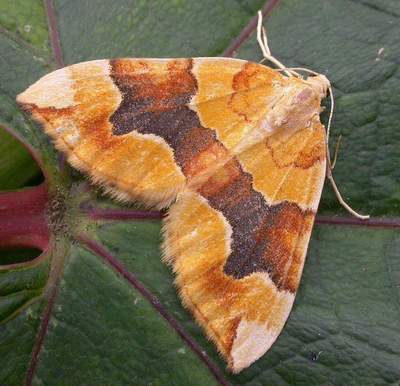
|
© Neil Sherman - Gem
|
© Neil Sherman - Barred Yellow
|
Of the numerous micros seen, the following are of possible note for the
site.
Acrocercops brongniardella
(10th + 14th, the first records of the
adult at the site - seen as a leaf mine previously).
Acrolepiopsis
assectella (the Leek moth, first site record on the 3rd).
Agonopterix
scopariella (28th).
Thiotricha
subocellea (14th + 28th, first site
records, and possibly first records for the vice county).
Stathmopoda
pedella (17th, very characteristic resting posture with legs
sticking
out helps i.d this species!).
Lozotaenia
forsterana (13th, distinctive
by its large size!).
Spatalistis
bifasciana (second site record on the
7th).
Acleris holmiana (2 on
the 14th),
Acleris logiana
(10th, regular
here).
Epiblema foenella
(14th, second site record).
Cydia
fagiglandana
(the 3 on the 10th were the second site records).
Sitochroa verticalis
(9th), Ostrinia nubilalis (the European Corn-borer, first site record
on the
13th).
Anania verbascalis (2
records - first seen last year).
Pempelia
genistella (28th, first site record - a potential colonist as
there is
plenty of the foodplant, Gorse here).
Pempelia
formosa (2 records,
notable as it was only seen for the first time at the site last year).
Pyla fusca (27th, first site
record) and
Dioryctria sylvestrella
(2
records, now annual here).
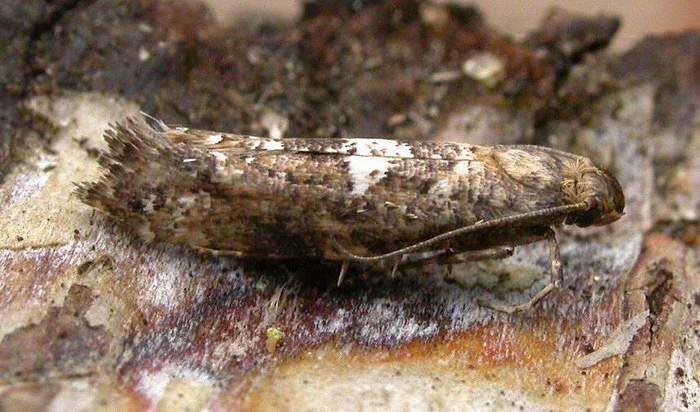
|
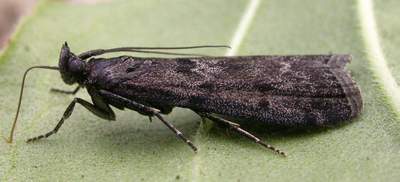
|
© Neil Sherman - Acrolepiopsis assectella
|
© Neil Sherman - Pyla fusca
|
Daytime observations included a record of the Yellow-legged Clearwing,
the second site record, and again in a polytunnel (same as last year!).
Also found were the mines of
Ectoedemia
louisella on the 6th. This
species mines Field Maple seeds (keys), and was another new site record.
Mendlesham Green Records to 31st
July 2005 - Steve Woolnough
The first trap-night of 2005 was 15th March and tended to set the scene
for the early months of the year, with a only a single March Moth and
Hebrew Character. Adverse weather meant the trap was run on just four
nights during the month, with common species only showing and numbers
being considerably down on last year. A total of just nine species was
recorded.
April started quite well with a very smart-looking Satellite which had
obviously spent a comfortable winter somewhere on the first of the
month, followed by a new moth for the garden, a Shoulder Stripe, the
next night. However, any early promise was dashed and the month ended
once again with fewer species and lower numbers than recorded in 2004.
May 1st saw another garden first with a Mullein, although the larva are
frequently seen on the Great Mullein plants in the area during the
summer. The month remained quiet until 27th, when on a mild night, 46
species were recorded. This number was over double the next highest
total recorded during the month and included
c15 Green Carpet and
c30
Rustic Shoulder-knot. On this night, two more garden 'firsts' appeared,
Least Black Arches and Orange Footman. Despite this one night special,
species were still down on last year, with the month closing on 63 as
against 79 for 2004.
Surely the weather would improve in June? Unfortunately not! Only 107
species were seen, whereas the same month last year produced 149. The
trap was run on only 8 nights compared to 16 in 2004. Two records of
note, however, were a Tawny Shears on 4th (not a garden first - another
occurred almost exactly a year earlier on 3rd June, 2004), and a Gothic
on 17th.
Finally, the weather improved and July was an excellent month. The 1st
saw a new garden species record, with 108 recorded, of which 68 were
macros. New moths included Freyer's Pug and Small Fan-foot, and there
were over 20 Green Pug. This date also saw the first Orange Moth of the
year, with five occurring, one of which was a female. On 9th July, the
trap held 12 'hawks', seven of which were Privet. On 13th, three new
garden moths appeared; Ghost, Round-winged Muslin and Double Lobed. My
common 'hawk' garden record list was finally completed on 17th, when a
Pine Hawk-moth appeared; both Convolvulus and Striped having previously
occurred. The 29th was another bumper night with 102 species, amongst
which was a Dark Sword-grass, a White Satin and another new garden
moth, a very brightly marked Vestal. Total numbers on this night were
impressive too, with
c50
Mother of Pearl,
c20 Dingy
Footman,
c50 Dark
Arches,
c100 Common Rustic
agg. and over 20 Lime-speck Pug. By the end
of the month, 214 species had been recorded against 170 for 2004.
Whilst a few good garden records were made during the first part of the
year, apart from July, recording has not been good, with the weather
clearly impacting. This is reflected in the number of nights the trap
has been run, which to the end of July totalled just 38 for the year,
as against 66 for the same period last year.