Reports
from Recorders around the county
Records reported in
this section have not been checked by the Suffolk Moth Panel. Many
thanks go to the recorders who provide write-ups and records for this
section.
Moths at Bawdsey, July to December 2006
- Matthew Deans
July
This hot and sultry month with night time temperatures often in the
high teens/low twenties produced a fantastic number and variety of
moths with many rare immigrants recorded.
The third
Ethmia terminella
for the site (all this year) was trapped on
7th. At this time of year some of the coastal pyrales are
particularly evident:
Platytes
alpinella (taken six times),
Anerastia
lotella (4th and 7th) and
Gymnancyla
canella (taken nine times, first
ever records) were the highlights. The pyrale
Sciota adelphella
put in a good show with seven recorded this month between 2nd and 20th.
Macros worthy of note included Lackey (12th and 19th), Tawny Wave (3rd
July), Rosy Wave (4th and 13th), Balsam Carpet (4th), Many-lined (17th
- first site and third County record), Phoenix (19th and 20th),
Feathered Beauty (4th - third County record), Round-winged Muslin (17th
first site record), Red-necked Footman (4th), Dotted Footman (16th,
18th and 24th), Pigmy Footman (12th and 18th), Scarce Black Arches
(19th - second site record), Sand Dart (4th - first site record),
Langmaid’s Yellow Underwing (five between 19th and 31st), Minor
Shoulder-knot (10th), Tree-lichen Beauty (two on 25th and one on 26th),
Slender Brindle (two on 24th), Silver Barred (singles on 4th and 6th)
and Scarce Silver Lines (7th).
The L-album Wainscot was trapped seven times between 2nd and 19th – a
slightly better showing than in
2005.
Regular migrant totals for the month were 782
Plutella xylostella
(Diamond-back), 14
Ostrinia nubilalis
(European Corn-borer), 16
Nomophila noctuella (Rush
Veneer), one Gem, 28 Dark Sword-grass, five
Small Mottled Willow, two Bordered Straw and 1000 Silver Y.
August
This month was not quite as manic as July, however it was busy with
immigrants including a notable arrival of Scarce Bordered Straw.
Some interesting micros included
Aphelia
viburnana (1st and 2nd),
Cryptoblabes bistriga (8th)
and
Ancylosis oblitella (1st
and 7th).
Noteworthy macros for Bawdsey were Dark Spinach (18th and 31st),
Cypress Pug (14th – third County record), Large Thorn (22nd), Striped
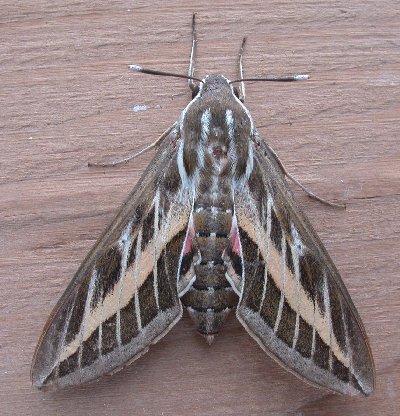
Hawk-moth (one on 19th was a long awaited addition the site list),
Square-spotted Clay (four this month), Great Brocade (two on 15th),
Cosmopolitan (24th – second County record), Suspected (17th), Reed
Dagger (6th and 16th), Langmaid’s Yellow Underwing (one on 2nd),
Tree-lichen Beauty (singles on 8th and 16th – the tenth and eleventh
individuals ever taken at Bawdsey), Bulrush Wainscot (18th), Webb’s
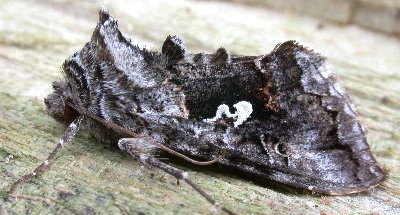
Wainscot (17th), Gold Spot (6th), Scarce Silver Y (13th) and
Pinion-streaked Snout (16th).
 |
|
| Striped Hawk-moth © Matthew Deans |
Scarce Silver Y © Matthew Deans |
One of the highlights of the month was the appearance of large numbers
of Humming-bird Hawk-moths. They were seen almost daily nectaring
on Buddleia with peak counts of 10 on 11th and seven on both the 16th
and 21st.
Regular migrant totals for the month were 116
Plutella xylostella
(Diamond-back), 28
Udea ferrugalis
(Rusty-dot Pearl), 194
Nomophila
noctuella (Rush Veneer), one Convolvulus Hawk-moth, 143 Dark
Sword-grass, 8 Pearly Underwing, 26 Small Mottled Willow, 53 Scarce
Bordered Straw, 22 Bordered Straw and 776 Silver Y.
September
This month was the most exciting period of the year with many quality
immigrants arriving – including some from the tropics.
A specimen of
Euchromius ocellea
(29th) was the most exciting micro and
was new to the County. Then there was another tropical pyrale –
Antigastra catalaunalis –
which arrived on 15th – this was the second
for Suffolk following one a few days previously at Dunwich Heath.
A
Palpita vitrealis on 24th
was only the second ever site record and a
specimen of
Oncocera semirubella
the first site record on 21st.
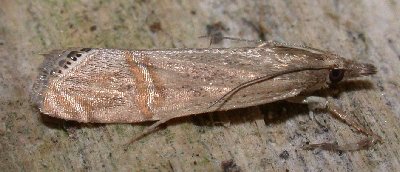
|
Euchromius
ocellea © Matthew Deans
|
Highlights amongst the macros were Vestal (a long awaited first site
record on 24th), Large Thorn (11th and 16th), August Thorn (11th),
Dotted Footman (singles on 13th and 14th), Four-spotted Footman (9 on
14th, 5 on 15th and 5 on 16th - part of a record influx into Suffolk),
Dotted Clay (16th), Large Ranunculus (two recorded), Dusky-lemon Sallow
(three recorded), Clancy’s Rustic (one on 18th was the second County
record), Porter’s Rustic (one on 16th - second for Suffolk) and
Beautiful Hook-tip (22nd). The pride of place though went to the
Beautiful Marbled taken on 21st – a stunningly beautiful addition to
the Suffolk list.
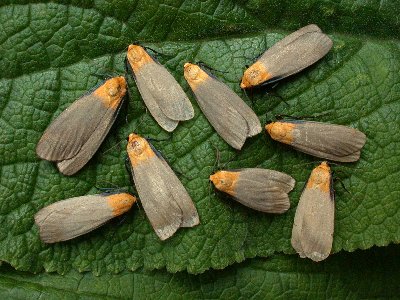 |

|
| Nine Four-spotted Footman © Matthew
Deans |
Beauitful Marbled © Matthew Deans |
Second-brood L-album Wainscot appeared from 11th and 47 were recorded
through until the month’s end peaking at 10 on 24th.
Regular migrant totals for the month were 72
Plutella xylostella
(Diamond-back), 18
Ostrinia nubilalis
(European Corn-borer), 19
Udea
ferrugalis (Rusty-dot
Pearl), 435
Nomophila noctuella
(Rush Veneer), one Vestal, one
Gem, 15 Convolvulus Hawk-moth, one Humming-bird Hawk-moth – first ever
trapped, 104 Dark Sword-grass, 109 Pearly Underwing, 21 Delicate, 15
Small Mottled Willow, 113 Scarce Bordered Straw, 3 Bordered Straw and
138 Silver Y.
October
Another warm and dry month with a good haul of immigrants dominating
the headlines. Some exceptional trap counts were achieved right
up until the end of the month.
Numbers of micros dwindled but still included some good ones most
notably
Acrolepiopsis assectella
Leek Moth (27th),
Tachystola
acroxantha (13th),
Crocidosema
plebejana (noted three times) and
Palpita vitrealis (17th and
29th).
Macros were represented by Juniper Carpet (25th), Streak (13th),
Red-headed Chestnut (one of ab. glabra on 12th), Dusky-lemon Sallow
(5th), Golden Twin-spot (five between 17th and 29th) and Clancy’s
Rustic (12 between 10th and 30th).
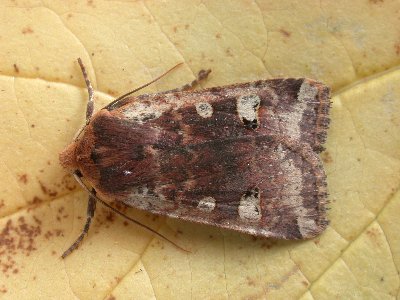
|
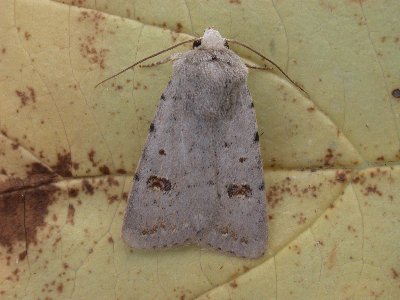
|
Red-headed Chestnut ab. glabra © Matthew Deans
|
Clancy's Rustic © Matthew Deans |
The L-album Wainscot second-brood continued right through until 28th
with 41 trapped during the month.
Regular migrant totals for the month were 49 Plutella xylostella
(Diamond-back), 138
Udea ferrugalis
(Rusty-dot Pearl), 503
Nomophila
noctuella (Rush
Veneer), 7 Gem, 3 Convolvulus Hawk-moth, 134 Dark Sword-grass, 95
Pearly Underwing, 100 Delicate, 3 Small Mottled Willow, 79 Scarce
Bordered Straw and 511 Silver Y.
November
A poor month with the highlights being a few late immigrants and
several late examples of resident species.
A Lesser Yellow Underwing was recorded on 16th, Dark Arches on 15th
with a Large Wainscot on 5th.
Regular migrant totals for the month were 3
Plutella xylostella
(Diamond-back), 18
Udea ferrugalis
(Rusty-dot Pearl), 1
Nomophila
noctuella (Rush Veneer), 4 Dark Sword-grass, one Pearly
Underwing, one
Delicate and 46 Silver Y.
December
The trap was only run twice with single
Plutella xylostella
(Diamond-back) and Pearly Underwing taken on 11th and two December
Moths taken on 14th.
Moths at Ipswich Golf Course, October 2006
to February 2006 - Neil
Sherman
October
October 2006 was another very mild month, following
on from the warm September. Despite some night time temperatures being
over 12 degrees, very few moths were seen in the traps. 70 species were
caught (48 macros, 22 micros) from 14 nights trapping; in fact this is
a lower total than 2005 when 82 species were seen. There was lots of
excitement on the coast with plenty of immigrants appearing, but very
few of these seemed to filter inland. At the site, a Gem (10th), 2 Dark
Sword-grass (25th) and 5
Udea
ferrugalis were the only migrants of note.
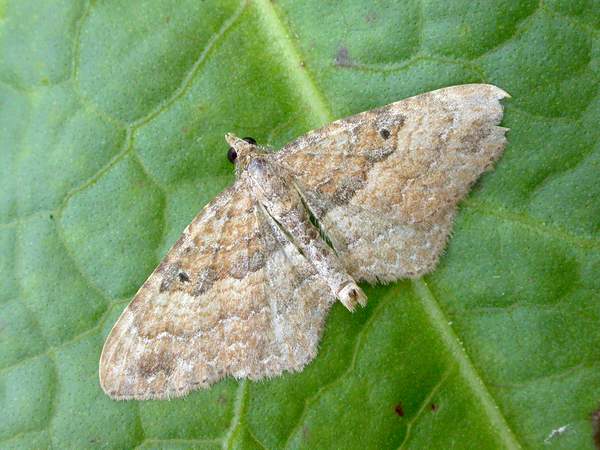
|
Gem © Neil Sherman
|
Other macros of possible interest included the
following. The Red-green Carpet had appeared in good numbers at the end
of September, this continued into October. 36 were seen, this being
record numbers at the site. Maximum on one night was 11 on the 9th.
Other moths in good numbers included Streak (21 seen), Blair’s
Shoulder-knot (16 seen, mostly in the garden trap) and Chestnut (200+
seen on
one clump of flowering Ivy on the 11th). There were also records of
Merveille du Jour (27th), Large Ranunculus (15th) and Dark Chestnut (3
records).
Three species appeared that were a bit more
unexpected, with their normal flight periods occurring during the
summer, although in recent years this phenomena is becoming more
common. Double -striped Pug (17th, latest ever), Rosy Footman (16th)
and
Buff Footman (5th and 16th) were all seen.
Micros of possible note were
Diurnea
lipsiella
(10th),
Eudonia angustea
(9th) and
Amblyplitia acanthadactyla
(2
records, 11th and 12th for the year). On the 7th, three mines of
Leucospilapteryx omissella
were found on Mugwort in the garden, this
being a new site record.
November
Trapping was only attempted once in November, on the
14th. 7 species were caught, including another Red-green Carpet, 1
Udea
ferrugalis and 1 Silver Y amongst the commoner winter
species. A
daytime observation of interest for the site was an
Agonopterix
ocellana flushed whilst coppicing gorse on the 13th, the 3rd
site
record.
On the 24th, a quick search by torchlight at night at one of the Lunar
Yellow Underwing breeding sites on the course produced a count of 12
larvae in five minutes of looking. Good numbers of Winter Moth (40+
including several mating pairs) were also seen on oak tree trunks,
along with a few Scarce Umber and a singleton Northern Winter Moth.
December
No trapping took place in December, and very few
moths were seen at all. There were single daytime sightings of both
Acleris logiana and
Agonopterix umbellana on the 13th,
both flushed
while coppicing gorse. Other moths noted included Winter Moth and
Emmelina monodactyla both seen
by day on the 19th, and a Pale Brindled Beauty, seen on the clubhouse
wall under the security lights on the
29th. This is the 3rd December sighting of this species at the site.
Here is a brief summary of the trapping year at the
golf course – 696 species were recorded, 353 macros and 343 micros.
This was a better total than 2005, when 669 species were noted. Of
those 696, 38 were new species (25 micros and 13 macros). With these
numbers added to the overall list for the site, the total now stands at
1039 Lepidoptera (1009 moths).
January
First moths of the New Year were seen on the 19th,
when a trap left on in the garden overnight caught Spring Usher (2),
Chestnut (3), Early Moth (1) and
Tortricodes
alternella (2 - equal
earliest ever date). This was despite a gale-force wind picking up in
the early hours of the morning! Nothing else of note was seen until the
end of January, due to continuing very windy and sometimes cold
weather. The last few days of the month were very mild for the time of
year, and a trap was put out on the 31st. This produced 4 Spring Usher,
Chestnut, Pale Brindled Beauty, 2 March Moth and a larva of a Lunar
Underwing!
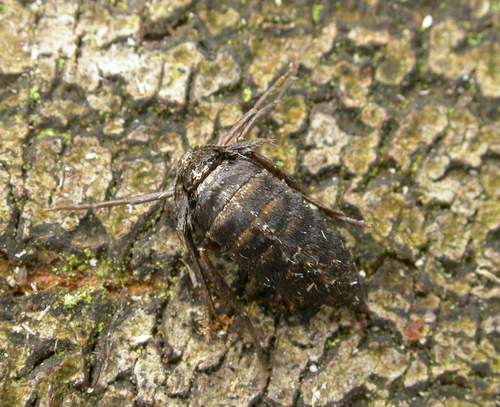
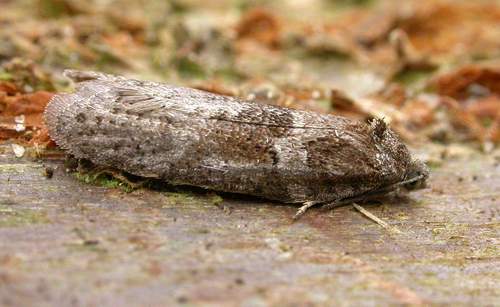
|
|
Female Spring Usher © Neil Sherman
|
Tortricodes
alternella © Neil Sherman
|
February
Mild conditions were prevalent during the month, but
it was often wet and windy too so little trapping was undertaken.
Lights were operated on 3 nights, mainly in the middle week. Most of
the usual early spring species were noted, but not in large numbers,
possibly because emergence took place over many nights rather than just
one or two warm ones, a phenomenon that has occurred in previous
seasons. Moths noted were Pale Brindled Beauty (peak 20 on the 19th),
Spring Usher (peak 6 on 15th), March Moth, Chestnut, Dotted Border and
Tortricodes alternella (peak 9
on the 15th). Other scarcer species seen included
Ypsolopha ustella (16th),
Acleris
logiana (one on the house window on the 1st) and Small Brindled
Beauty
(5 on the 19th were the first for the year).
A Common Quaker was noted in the garden trap on the
16th – this is the earliest site record for the species.
There were a couple of interesting daytime
observations. A singleton
Amblyptilia
acanthadactyla was noted while
coppicing gorse on the 6th – this species seems to be increasing in the
area. A female Spring Usher was found at dawn on the 26th on an oak
tree trunk – this is the first time this sex has been noted at the site.
A Woolpit winter and a stranger indoors
- Paul Bryant
As September faded into notebook memory the month of October saw a
distinct down turn in the number of moths attracted to the garden trap.
It all started off quite well with eleven species noted on the 10th.
These included a superb Merveille du Jour, a Barred Sallow and three
Pale Mottled Willows. Just a few days later, and the count was down to
five. And so it continued until the month end, albeit with a slight
reprieve on the 17th when I recorded nine species. The pick of the
months moths were Scarce Bordered Straw (6th and 21st), Large Wainscot
(16th & 17th), Feathered Thorn (four dates late month) and single
Silver Y and
Plutella xylostella
(27th) and an
Udea ferrugalis
(28th).
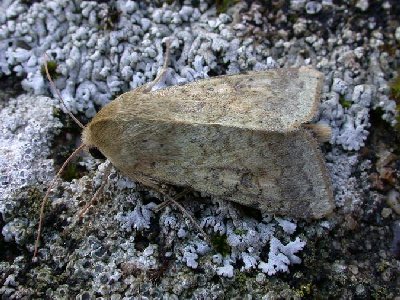
|
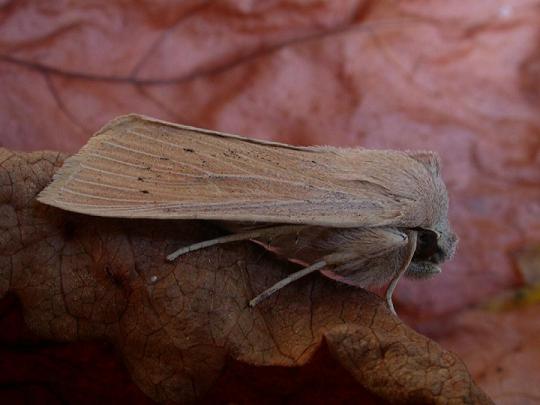
|
Scarce Bordered Straw © Paul Bryant
|
Large Wainscot © Paul Bryant
|
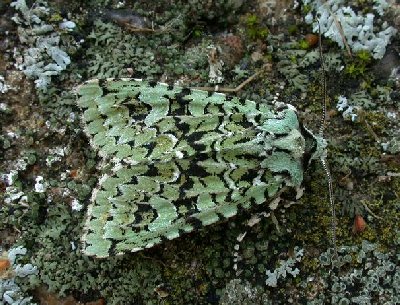
|
Merveille du Jour © Paul Bryant
|
When I packed the trap away at the end of October little did I realise
that that would be it for the rest of the year. A brief mild spell on
the 29th January tempted me to trap again. The reward for my efforts
was a single Chestnut. However, the prize for the first Woolpit moth of
2007 went to a Double-striped Pug that was found indoors on the 3rd.
February was a write-off but trapping started again in early March as
and when conditions have permitted. So far it’s just been the odd Small
or Common Quaker, Hebrew Character or Clouded Drab although a Grey
Shoulder-knot on the 8th and Twin-spotted Quakers on the 8th and 16th
have helped perk things up a little.
However, the biggest piece of news to come out of Woolpit stems not
from the trap but from the lounge curtains. A strange place to look for
moths you might think? It all dates back to the 21st October when I
stumbled across a rather strange looking moth sitting on the mat below
said curtains. It looked nothing like any moth I had ever seen before.
It was duly photographed and the image sent to a few group members who
were equally stumped. Anyway, to cut a long story short, the moth was
exhibited at the BENHS Exhibition in London where at first it generated
little interest. That was until someone suggested that it could be a
‘micro’ moth from Asia or Australasia. Martin Honey from the Natural
History Museum was invited to have a look and he recalled having seen
something similar but couldn’t place it. After a quick chat both the
moth and pupal case were donated to the NHM in the hope that a positive
identification could be secured.
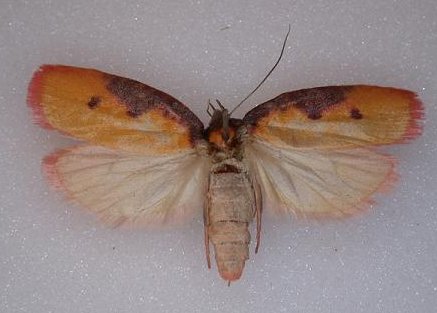
|
South African moth? © Paul Bryant
|
That evening I tried to thing of anything unusual that had been in the
house. All I could come up with was a somewhat ‘woody’ bouquet of
flowers that had been given to my wife a few weeks before hand. Further
investigation the next day revealed that the flowers had come from
Marks & Spencer’s where they had been sold under the name of ‘Cape
Flora’. The news was quickly relayed to Martin who replied by saying
that he had already come to the independent conclusion that my moth
was, indeed, South African in origin. Further more, he had narrowed it
down to a species of
Cryptolechia (a
rather large family of micro-moths).
Sadly, that’s where the story ends at the moment. Martin’s still
waiting to hear back from colleagues in South Africa and I still don’t
know whether I have an ‘adventive’ first for Suffolk and the UK. All I
can say is “Stay Tuned Folks”.
As always, happy trapping.
Paul
Eye Moths, November 2006 to March 2007 -
Paul Kitchener
November
Although night time temperatures held up quite well for most of the
month only thirteen species were recorded which is about the average
for the six autumns I have now trapped at this site.
Only two “migrants” showed up, the last
Plutella xylostella of the year
was seen on the 13th and a Silver Y was trapped on the 12th.
Orthopygia glaucinalis on the
5th was the second latest site record and
Acleris sparsana on the 10th
was the first I’ve recorded in November.
Strangely, December Moth is a scarce species in Eye, in the ten years
prior to 2006 I had caught only ten individuals so the two this autumn
was double the average! Four Sprawler this autumn is also quite good;
the first was at the end of October and the last in December.
December, January and February
The six species trapped in December included a very late Dark Arches on
the 2nd and a Silver Y on the 14th. Only two Winter Moth have been
seen, both in December and for the second consecutive winter/spring no
Early Moth have appeared.
The first moth of the New Year was a Pale Brindled Beauty on the 13th
January, a very welcome sight not just for that reason but for the fact
that I saw none at all last year. The remainder of the winter period
produced nothing more than the odd Dark Chestnut and Chestnut.
March
For numbers of species and individuals recorded last March was my worst
March on record, so hopes were high that this year just had to be
better. As it turned out it was, with most species appearing on cue and
in good numbers, especially Common Quaker, the numbers of which, by the
month’s end, had already exceeded those of the entire spring of 2006.
The first was trapped on the 7th with Hebrew Character following the
next day (the first ones last year were on the 26th and 30th
respectively, by far my latest ever).
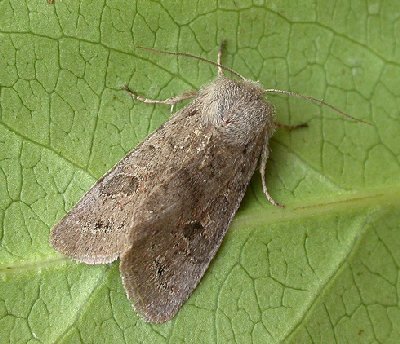
|
|
Lead-coloured Drab © Paul Kitchener
|
Diurnea
fagella © Paul Kitchener |
A Red Chestnut on the 8th was my earliest ever record and four
Diurnea
fagella were seen, the last at this site was in 2003. Another
species
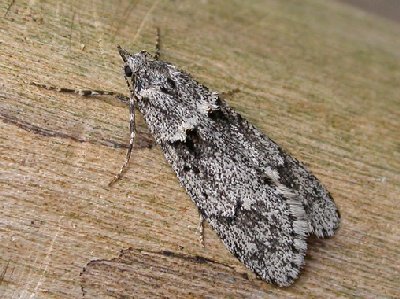
seen here for the first time since 2003 was Lead-coloured Drab, a
single being trapped on the 26th. The last day of the month produced an
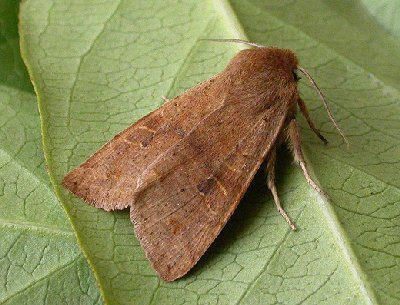
immaculata form of
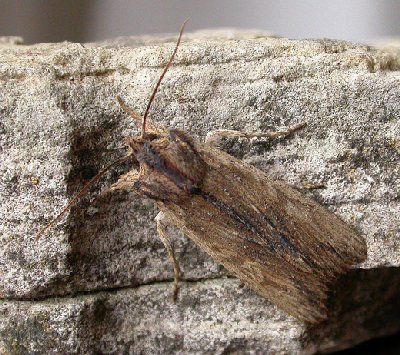
Twin-spotted Quaker, rarely seen here, but more
surprising was a Tawny Pinion, a site first and “lifer”.
|
|
Twin-spotted Quaker f. immaculata © Paul Kitchener
|
Tawny Pinion © Paul Kitchener |
So, a better start to the mothing year than in 2006, but will it
continue? The first half of 2007 cannot be worse and the second half
cannot be better, surely?
Moths at Rendham, July to December 2006
- Matthew Deans
July
The hot and sultry conditions experienced during the month certainly
meant that mothing was busy.
Pick-of-the-bunch amongst the micros included
Mompha ochraceella on 2nd,
Epiblema foenella and
Ostrinia nubilalis European Corn
Borer on 5th,
Pyralis farinalis
Meal Moth on 11th and
Euzophera
pinguis on 20th.
A single Leopard Moth was taken on 5th – recorded most years at
Rendham. Both the Large and Small Emerald were trapped on
2nd. Amongst the pugs, two specimens of Yarrow Pug were
identified on 20th and 25th – and a Narrow-winged Pug on 25th - the
first garden records. The Magpie Moth was also trapped on both
the 20th and 25th with Orange Moth on 2nd and 5th.
The White Satin peaked at three on 25th and a Rendham speciality the
Muslin Footman appeared on 5th when two were trapped. The Olive
was caught on two occasions, Lunar-spotted Pinion on three nights and
Fen Wainscot on 20th. Both Plain and Beautiful Golden Y were
trapped several times during the first half of July. One of the
highlights of the month was the Beautiful Hook-tip trapped on 20th –
the second garden record after the first last year.
August
Another hot and humid month produced some fantastic new garden records.
The micro
Scrobipalpa costella
was identified for the first time in the garden on 10th.
Otherwise micros were pretty much run-of-the-mill with
Agriphila selasella on 8th,
Elophila nymphaeata Brown
China-mark on 10th,
Parapoynx
stratiotata Ringed China-mark on 8th and
Nephopterix angustella on 16th
about the most noteworthy in garden terms.
Amongst the geometers a Maiden’s Blush on 8th, Flame Carpet on 22nd and
Small Phoenix on 10th were all scarce visitors to the garden trap.
The Humming-bird Hawk-moth was recorded nectaring at Buddleia in the
garden on 22nd and 29th – these were the first confirmed garden
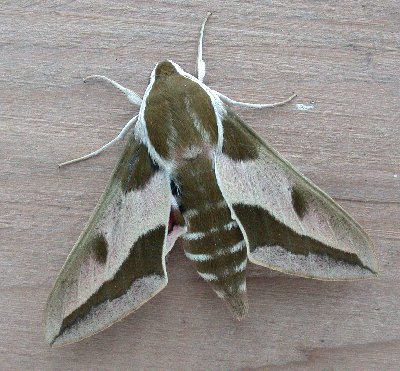
records. However pride-of-place went to the pristine Spurge
Hawk-moth trapped on 16th – most certainly the moth-of-the-year at
Rendham and very well received. It was discovered perched on the
perspex of the Skinner trap and had arrived some time between 2am and
dawn as the trap had been inspected at 2am.
|
Spurge Hawk-moth © Matthew Deans
|
Still a nice moth of see, despite its relegation from the UK BAP
species lists, is the Square-spotted Clay. This year singles were
trapped on 8th and 16th.
Other noctuids of interest included Feathered Gothic on 30th, Bulrush
Wainscot on 16th and two Scarce Bordered Straws trapped on
8th.
September
It was to be another exciting month for mothing – particularly for
migrants. Night time temperatures fortunately held up and
produced some very interesting results.
As to be expected the micro numbers tumbled although a
Hypatima rhomboidella on 28th was
welcome. A scattering of
Nomophila
noctuella Rush Veneer arrived during the month and singles of
Orthopygia glaucinalis and
Nephopterix angustella on
27th.
A single Vestal was the third garden record on 26th – incredibly this
species is more regular at Rendham than at Bawdsey which only has one
record! The Bordered Beauty is a wonderful moth – this year one
was taken on 16th.
An amazing seven Convolvulus Hawk-moths were trapped between 20th and
28th including two on 21st and three on 23rd. These were the
first records for Rendham and part of a wider influx into Suffolk and
indeed the UK as a whole. Another species which was subject to a
large influx into Suffolk was Four-spotted Footman – one male was taken
on 15th – another new garden record.
The Pearly Underwing does not appear in the garden annually – the
specimen on 21st was the first since 2004. Even rarer in garden
terms was the Heath Rustic taken on 16th – the first garden record
since 1999. Two different specimens of The Delicate were caught
on 27th and 28th – new for the garden. A Feathered Brindle was a
garden second and first since 2003 and Black Rustic on 21st was yet
another first!
National Moth Night on 23rd produced two new macros for the garden –
Small Mottled Willow and Blair’s Wainscot – the latter was also new to
the County and totally unexpected. Three Scarce Bordered Straws
also arrived the same night along with the Convolvulus Hawk-moths
already mentioned above.
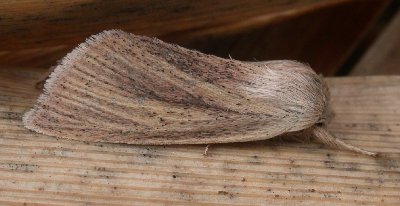
|
Blair's Wainscot © Matthew Deans
|
A Dusky-lemon Sallow was another addition to the garden list on 27th –
this species appearing to have a good year county-wide.
October
It was rather an anti-climax here at Rendham after the fabulous
summer.
November Moths appeared from 16th (six trapped) and a few Mallow and
Feathered Thorn persisted.
Four specimens of Merveille du Jour and an Orange Sallow on 17th
brightened up the catch and six Brown-spot Pinions were trapped
throughout the month.
Singles of Dark Sword-grass and White-point together with three Silver
Y on 17th hinted at migration but nothing more exciting could be found.
November and December
No trapping was undertaken due to the poor conditions.