Field
reports - Tony Prichard
Moth Night at Wordwell - 18th March 2005
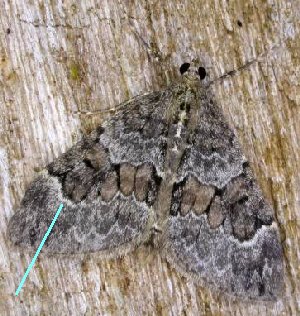
This was one of our first nights out looking for Barred Tooth-stripe in
the Brecks. With plenty of privet bushes spaced between the conifer
blocks it seemed a suitable candidate for running some lights. This
turned out to be rather a long night, after turning up at dusk to set
up we waited around until about midnight, following comments that the
species would appear to be a late flier. After a larval search in the
early evening there was not a great deal of activity to keep us
occupied with only a few species coming to light - Yellow Horned, Oak
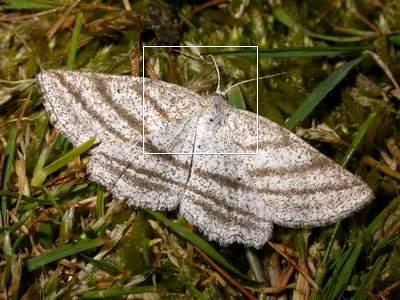
Beauty, Grey Shoulder-knot. Moth of the night was Mottled Grey with
good numbers at the lights and also noticed in torchlight as we
wandered around. Alas no Barred Tooth-stripe.
Moth Night at Hintlesham Wood - 25th March 2005
A visit to continue the recording of this ancient woodland site started
the previous year. A reasonable selection of species (16 in total) for
the time of year with Yellow Horned, Shoulder Stripe, Engrailed, Red
Chestnut and Twin-spotted Quaker. Actual numbers of individuals
appeared to be rather on the low side.
Moth Night at Wordwell - 1st April 2005
A second visit to look again for Barred Tooth-stripe and just as
successful as the previous visit. The upside is that we did not waste
as much time achieving our negative result having decided to turn up
much later and set up in the dark. By this time Mottled Grey numbers
were well down although a reasonable selection of spring-time species
was seen, with
Semioscopis
steinkellneriana being the most noteworthy.
Moth Night at Maidscross Hill - 12th April 2005
After being checked out by the local police patrolling near the airbase
we set up four lights around one of the larger clumps of privet on this
classic Breckland moth site. Still no Barred Tooth-stripe but a few
other species of interest came to light - Powdered Quaker, Broom-tip,
Red Chestnut and the usual spring-time
Orthosias.
Moth Night at Tangham Forest - 16th April 2005
One of our favoured local haunts that normally does quite well. My
recollection was that there was quite a bit of blackthorn at this site
but it must have disappeared or moved, as we wanted to try and target
Sloe Carpet. Not surprisingly given the small amount of blackthorn
present - no Sloe Carpet was recorded. Species of note were Yellow
Horned, Water Carpet, Engrailed, Red Chestnut, Satellite, Early Grey
and some more spring-time
Orthosias.
Moth Night at Newbourne Springs - 22nd April 2005
The last time we visited this site in April it was a night of
refrigerator temperatures - I don't think it was too far off becoming
that cold on this night either. Continuing with the search for Sloe
Carpet this site was picked as up on the hill in the reserve there is a
good block of blackthorn, where we have had Sloe Pug in the past.
Activity was rather slow during the evening with only eleven species
recorded including Early Tooth-striped, Frosted Green, Purple Thorn,
Muslin Moth and Brindled Pug.
Moth Night at Pattles Fen - 25th April 2005
Russell Leavett, retired RSPB warden, alerted us to this site that is
now a small Woodland Trust reserve on the outskirts of Brantham. As
Sloe Carpet had been recorded in the vicinity in the past it seemed
worthwhile giving the site a visit. There is not much blackthorn on the
site itself,
although there is plenty in the hedgerows in the surrounding area.
Given its size it is rather an unusual site with acid grassland, fenny
areas and sallow carr. No Sloe Carpet came to light but several new
species to the
ten kilometre square were picked up on the night so the visit was
justified. Species of possible interest were Scarce Tissue, Frosted
Green, Lunar Marbled Brown, Powdered Quaker, Coxcomb Prominent and
Brown Silver-line.
Moth Night at Ickworth Park - 29th April 2005
This National Trust site has some very good pieces of woodland mixed in
between parkland habitat and would appear to have been relatively
under-recorded in the past. Five MV lights were operated in one of the
more accessible pieces of woodland. This was a night of pugs - with
most of the moths appearing at the sheet being Brindled or Oak-tree
Pug. Other species of note were Frosted Green, Water Carpet, Small
Waved Umber, Purple Thorn and Nut-tree Tussock.
Moth Night at Groton Wood - 1st May 2005
Continuing our search for Sloe Carpet this woodland site was picked as
the species had been previously recorded here in 1995. For a
change weather conditions were quite favourable and reflected in the
number of species recorded. Orange Footman now appears to be turning up
almost anywhere in the county and was a new site species on the night.
More of the later spring-time species were now appearing with Pebble
Hook-tip, Chinese Character, Scorched Carpet, White-pinion Spotted,
Prominents (Pale, Pebble, Swallow and Coxcomb), Lunar Marbled Brown and
Least Black Arches being recorded.
Reports
from Recorders around the county
Records reported in
this section have not been checked by the Suffolk Moth Panel. Many
thanks go to the recorders who provide write-ups for this section.
Moths at Ipswich Golf Club - January to
April 2005 - Neil Sherman
First moths for the new season were both Winter Moth and Mottled Umber,
both seen on the 4th (attracted to the lighted windows of the work
sheds). Other sightings up till the end of the month included regular
observations of Spring Usher (at lighted windows or at rest on the
walls of outbuildings) and the borings of Lunar Hornet Moth larvae in
coppiced Sallow stumps.
On the 31st, conditions were deemed good enough to attempt some light
trapping. Both an 11w actinic and a Robinson trap were put out, and
produced the following results (11w/Robinson totals):
Tortricodes alternella (4/25),
March Moth (16/0), Spring Usher (0/23), Pale Brindled Beauty (5/4),
Chestnut (2/5), Dotted Border (1/0) and Early Moth (1/0). As both traps
were in similar habitat, it is interesting to see that the March Moth
was present only in the actinic while the Spring Usher was only in the
Robinson trap.

|

|
© Neil
Sherman - Early Moth
|
© Neil
Sherman - Spring Usher
|
Very little trapping was done in February, due to the cold snowy
conditions. Traps (Robinson + actinic) were run on the 3rd and 9th,
producing 6 species. These were (with the total number in brackets):
Tortricodes alternella (42), Spring
Usher (35), Pale Brindled Beauty (27), March Moth (11), Dotted Border
(1) and Chestnut (15). Hopefully things will improve in March!
Conditions for trapping did not improve in early March, with more cold
weather. The first attempt at trapping was the 15th, with lights being
put out on another 3 occasions during the rest of the month. Compare
this with last year, when light traps were operated on 8 nights - this
shows how poor the early season has been this year. Best night was the
22nd, with 15 species present.
Most of the moths seen were the usual suspects for this site, including
Oak Beauty (first 15th, followed by 4 on the 20th and a peak of 10 on
the 22nd, including a melanic specimen). Small Brindled Beauty was also
first seen on the 15th (17), but only one other was seen after that on
the 22nd. Yellow Horned peaked at 10, on the 22nd, as did Small Quaker
(58 trapped). Other macros of possible note seen were Red Chestnut (1),
Grey Shoulder-knot (1), Twin-spotted Quaker (6) and Engrailed (2).
There were 2 micros of interest.
Eriocrania
semipurpurella, trapped on the 31st, confirmed by genitalia
dissection by Jon Clifton, was the second site record - a superb moth.
The other,
Agonopterix ocellana,
was flushed while coppicing willows on the 8th.

|

|
© Neil Sherman - Eriocrania semipurpurella
|
© Neil Sherman - Early Tooth-striped
|
There was only one sighting this year of the day-flying Orange
Underwing, on the 17th.
In April, weather conditions were better with traps operated on 5
nights during the month, with the warm weather and the progressing year
meaning that numbers of moths increased. The best night was towards the
end of April, on the 28th, when 28 species were seen.
Macros of possible note for the site included the following. Small
Quaker peaked for the year on the 3rd, when 80 were trapped. Common
Quaker peaked a little later, with 46 seen on the 12th. The Frosted
Green was seen every trapping night, with a peak of 9 on the 12th. The
last Oak Beauty of the year was caught on the 3rd. Early Grey has been
noticeable by its low turnout, with only 2 records of singletons on the
10th and 12th. Brindled Beauty has only appeared once so far (10th),
but more may appear next month. Pine Beauty has also only been seen
once (12th), another poor showing for this site. Yet another 2 species
having a poor year are Early Thorn and Purple Thorn. Each have appeared
only once (both 28th), hopefully the second brood will be stronger. The
Water Carpet (2 on 12th), White Ermine (25th), Lunar Marbled Brown
(25th), Scalloped Hook-tip (3 on 25th), Oak-tree Pug (25th) and Orange
Footman (28th) all appeared for the first time in 2005 on the dates
given. Early Tooth-striped appeared twice (25th, 28th), both times as
singletons. The prominents made their traditional appearance at the end
of the month, with Swallow, Lesser Swallow (peak 13 on 28th), Great (2
25th + 1 on 28th) and Pebble all being seen.
Micro numbers increased dramatically during the month, with, as always
at this site,
Eriocrania
subpurpurella being the most common. 100 were seen on the 12th,
but this was beaten on the 28th by a count of 142 (and yes I did count
them all!).
Caloptilia populetorum
was seen on the 12th and 28th, an increasing species at the site. The
most interesting species appeared on the last trapping night (28th),
with
Plutella xylostella,
Eriocrania sparrmannella and a
probable
Eriocrania unimaculella
(this is subject to confirmation) all appearing.
Moths
at Bawdsey - January to April 2005 - Matthew Deans
January
The month started rather predictably with a Winter Moth
attracted to security lights on 3rd being the first moth recorded this
year. Peak counts of this species were six, Jan. 4th and five,
Jan. 28th, with a monthly total of 28 (20 recorded in Jan. 2004).
Four highly variable Mottled Umbers were observed at the security
lights between 5th and 28th. A single Early Moth on 16th was to
be expected, but surprisingly, was the sole record of the winter (apart
from a dead specimen found in a spider's web). Double figures of
this species had been recorded in both of the previous two years.
The two Dotted Borders on 24th and 28th were the earliest ever noted at
Bawdsey. A Spring Usher on 30th was most welcome as it
constituted a new site record. The only micro recorded this month
was a single
Emmelina monodactyla
on 4th.
February
As I was away on holiday in The Gambia for during the first
fortnight of the month, very little recording was undertaken this
month. Nick Mason kindly checked the security lights on three
occasions but no moths were present!
The only moths recorded during the second half of the month were single
Dotted Borders on 15th and 17th. From then onwards the Estate was
covered in snow!
March
A Pale Brindled Beauty at security lights on 7th was the first moth
recorded this month. Two March Moths and a Dotted Border appeared
on 9th with further records of both species over the following week.
The 'find of the month' must go to the Joiner at Bawdsey who brought in
to my office a Humming-bird Hawk-moth on 10th. He was
repairing a first-floor window in The Manor and the moth flew into the
back of his neck. It was quickly secured in a glass which was
covered with masking tape!
Mild conditions prevailed for the second half of the month.
Trapping was undertaken for the first time ever at this time of year at
Bawdsey. It was not surprising to add some common species to the
site list, which had not been recorded at security lights. These
included
Tortricodes alternella
and Oak Beauty on 17th, Pine Beauty on 21st, Herald on 22nd, Small
Quaker on 29th and Lead-coloured Drab on 31st.
Security lights continued to be the main source for March Moths and
Dotted Borders and provided the sole record of Shoulder Stripe on 18th.
April
The month opened with another Lead-coloured Drab trapped on 1st and a
Mottled Grey at the security lights on 2nd - another good new site
record and presumably a wanderer from the nearby Sandlings population.
Careful checking through the orthosias revealed eight Powdered Quakers
this month and 15 individuals of Northern Drab (first moth on the 4th,
third consecutive year the species recorded at Bawdsey).
Powdered Quaker was new for the site as was an Early Grey - both first
trapped on 4th.

|

|
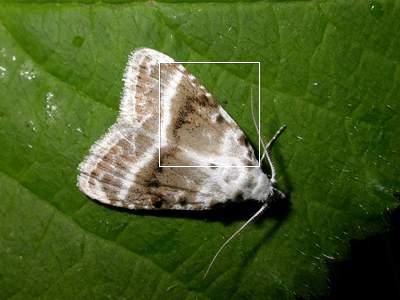
© Matthew Deans - Mottled Grey
|
© Matthew Deans - Northern Drab
|
The Scarce Tissue was recorded on 24th and 29th at security lights and
two Streamer were discovered by the same method on 27th.
The wings of a Puss Moth were found outside the trap on 28th -
constituting another new site record although a great shame it had
succumbed to the local birds!
A total of 35 Red Chestnut were recorded during the month - the species
is much more abundant here than at Rendham. Another high
total was the 25 Twin-spotted Quakers - this species appears to have
had a good year.
The last week of the moth brought not only late records of Dotted
Border (29th) and Grey Shoulder-knot (28th) but the first
Scoparia ambigualis, Common Carpet,
Brimstone Moth, Swallow Prominent, Muslin Moth, Shuttle-shaped Dart and
Cabbage Moth of the season - a sign of summer and things to come.
Grundisburgh Spring 2005 - Martin
Hough
It has been a bleak Spring here, moth wise. For much of the year
the weather has been too cold, windy or rainy to warrant putting the
trap out. On the occasions when I have able to do so, the haul has been
disappointing to say the least.
However, the usual crop of Quaker moths put in their appearance. The
Powdered Quaker,
Orthosia gracilis,
still continues to elude me, despite being billed as not infrequent on
Tony's Larger Moths of Suffolk pages. The Pine Beauty
Panolis flammea was a welcome
arrival, having been absent last year.
I was also pleased to see the Streamer,
Anticlea derivata come to my trap.
I normally find this species on fences and in woodlands, but is has not
seemed very susceptible to light. The Red Chestnut,
Cerastis rubicosa is another
species that I usually associate with woodlands, but seems to be fairly
well represented in my garden here.
There have been two hawk moths so far- the Lime Hawk,
Mimas tiliae appeared on the 29th
April- about three weeks earlier than I would normally have expected -
and a fresh Pine Hawk,
Hyloicus
pinastri appeared four days ago, on the 20th of May.
Hopefully this is an indication that at last the season is on the move.
It's about time.
Bungay Spring 2005 - Leigh Davis
Leigh has sent in the following list of species for the spring period
2005, recorded at actinic light at his home in Bungay. Common Swift,
Dark-barred Twin-spot Carpet, Silver-ground Carpet, Garden Carpet,
Green Carpet, Common Pug, Brimstone Moth, Early Thorn, Scalloped Hazel,
Pale Tussock, Buff Ermine, White Ermine, Garden Dart, Shuttle-shaped
Dart, Flame Shoulder, Shears, Common Quaker, Clouded Drab and Treble
Lines.
Mendlesham Green Records - Steve
Woolnough
The poor weather we have had during the first part of this year has
had its impact on garden mothing. A quick check of records shows that I
have run a light for just 16 nights up to the time of writing (25th
May), as against 32 nights to the same date last year. The first night
was 15th March with the most productive being 1st May, with just 26
moths of 13 spp. Even the commoner moths were hard to come by, with
Hebrew Character being the highest in terms of numbers with just 16 on
29th April, as against figures regularly in the 20's last year. In May
2004, 79 spp were recorded. So far, this month has produced just 28.
Despite somewhat depressing numbers, there have been a few records of
interest. A very smart Satellite occurred on 1st April, apparently
having gone through the winter virtually unscathed. The following night
saw a garden first with a Shoulder-stripe, and one of my favourites, a
Herald.
An unusual record of 30th April was Nephopterix
angustella, a spindle-feeding but still quite distinctive micro.
Whilst I have recorded this localised moth in the garden before, the
earliest date has been 6th June. Literature puts the flight-time as
being August-September, so this does appear very early. (Thanks to Neil
Sherman for confirming this record).
With the first Common Swifts, Small Square-spot and Flame Shoulder last
night, the signs are that the weather is finally improving and garden
mothing will now become more productive.
Moths at Rendham - January to April
2005
- Matthew Deans
January
It was a slow start to the month for moth recording at Rendham.
Strong winds accompanied any mild spells thus hampering trapping
efforts.
A few blank trap nights were compensated by two specimens of Pale
Brindled Beauty at the garage lights on 9th and a single Early Moth on
13th. Just a single Winter Moth was recorded this month on 10th.
The first worthwhile trapping was undertaken on the mild night of 30th
with three Pale Brindled Beauties, single Spring Usher, two Early Moths
and single Chestnut, Hebrew Character and Early Grey at M.V. - these
last two species represent the earliest ever garden records.
February
I was away on holiday in The Gambia for the milder first fortnight of
the month.
With cold snowy conditions predominating during the second half of
February, it was not surprising that moths were in short supply!
In fact the trap was run once on 17th with the total catch being two
Pale Brindled Beauties and a March Moth.
March
During the first week of March, with Arctic conditions persisting, no
moths were trapped despite several attempts.
A single March Moth and an Oak Beauty (earliest garden record) were
trapped on 9th. The following night five March Moths were trapped
and a Dotted Border appeared at the garage lights.
Not before time, the first Common Quaker of the year was light trapped
on 14th, accompanied by just a single March Moth.
A Shoulder Stripe trapped on 15th was the first of eight this
month. An Acleris cristana on 17th and a Tortricodes alternella
on 19th were noteworthy for Rendham. The earliest ever Angle
Shades was trapped on 20th.
Average numbers of
Orthosias
were recorded with counts of 126
Small Quaker, 141 Common Quaker and 81 Hebrew Characters throughout the
month. The Twin-spotted Quaker total was 24 and four
Lead-coloured Drab were identified - all in the last week of the month.
April
The first week of the month saw the first Early Thorn and Pine Beauty
of the year. Mild conditions provided a good haul of 138 moths on
3rd, which were mainly
Orthosias
but did include two Engrailed and four Red Chestnut.
The middle of the month was quite cool and catches were much
reduced. The first Muslin Moth appeared on 16th, which was about
the most exciting catch.
One of the highlights was the record numbers of Streamer caught this
year (nine between 22nd and 30th). Three Scarce Tissue also
appeared during this period (first on 25th).
The first Swallow Prominent, an early Bright-line Brown-eye and a
Herald were taken on 25th. A pristine Chocolate-tip was caught on
27th along with the first of five Powdered Quakers trapped this month.
It was exciting with new species for the year appearing virtually
daily. The 28th produced Purple Thorn and Lesser Swallow
Prominent and the 29th Oak-tree Pug, Brindled Beauty (new for garden),
Waved Umber, Great and Pebble Prominents.

|

|
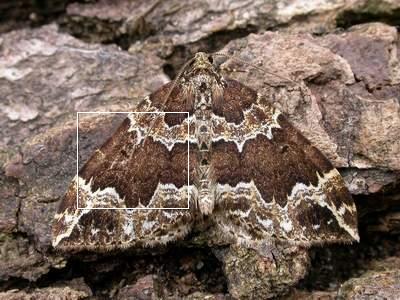
© Matthew Deans - Great Prominent
|
© Matthew Deans - Brindled Beauty
|
The final night of the month (30th) provided yet more new species for
the year including a few micros:
Ypsolopha
ustella,
Esperia sulphurella,
Phtheochroa rugosana, Chinese
Character, Lunar Marbled Brown (rare at Rendham), Ruby Tiger and
Cinnabar.